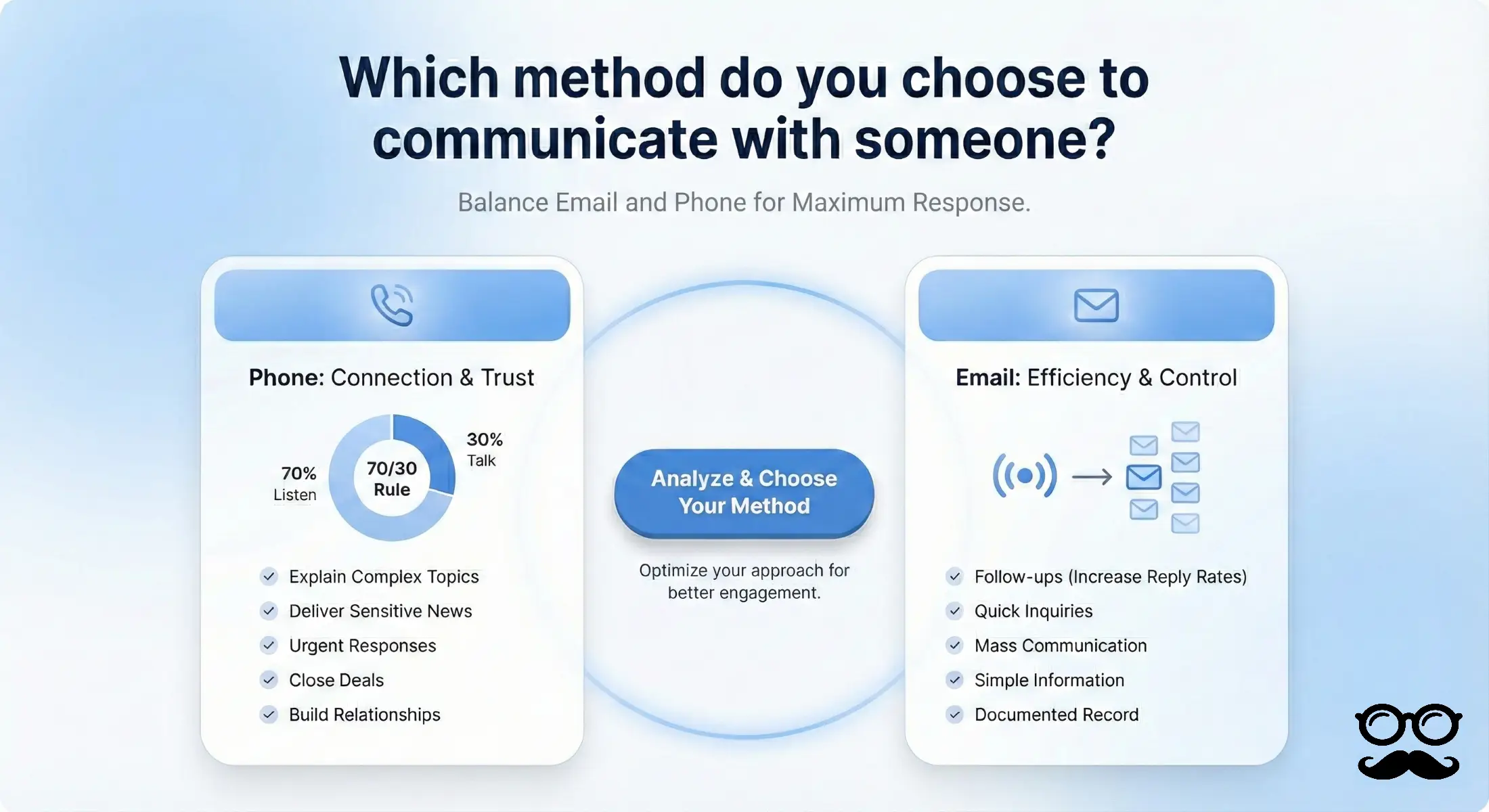
Which method do you choose to communicate with someone? There are many methods of communication. Nearly everyone chooses email for their communication methods. For me as someone to communicate with, I also use emails. But sometimes there is a kind of situation where we have to choose phone calls as a communication method, especially in sales. There is a time and place for both communication methods. A phone call is also used for the sales process, so don’t depend only on emails.
The main reason is that you should be focusing on the sales outreach methods that give you a better response from a prospect. This method is not about whether to use email or call; it also needs to know when to use each method. Here you need to know to make the right choice.
The methods for phone calls
What is the 70/30 rule during a sales call?
Talk for about 30% of the call and listen for about 70%. This empowers you to gather critical insights, understand customer needs, and position your solution more effectively. Incorporating this approach can be a game-changer in telephone outreach, reflecting the consultative style that Meet Alfred champions.
In emails, there is no real human interaction with a prospect. But in phone calls, you can better interact with a prospect. Phone calls allow you to build trust and authenticity and enact connection. If there will be a larger conversation with a prospect, then you should use the phone call. Choose this method when:
- You have to explain some complicated things.
- You need to convey some poor news.
- You need a response as fast as it is.
- You are looking to shut the deal.
- You want to establish a relationship.
When to use email
An actively engaged sales representative cannot wait to call each one of the equally busy prospects. This thing is very time-consuming. In that situation, email helps you to save your time and get work done efficiently. It is the best method of communication to have full control over the conversation. Use it when you have to say something simple and quick. Choose this method when:
- You are following up (first follow-ups can increase reply rates by 49%).
- You have something in correspondence.
- You have a quick inquiry.
- You have to send a text message to many people.
Choose the right outreach method
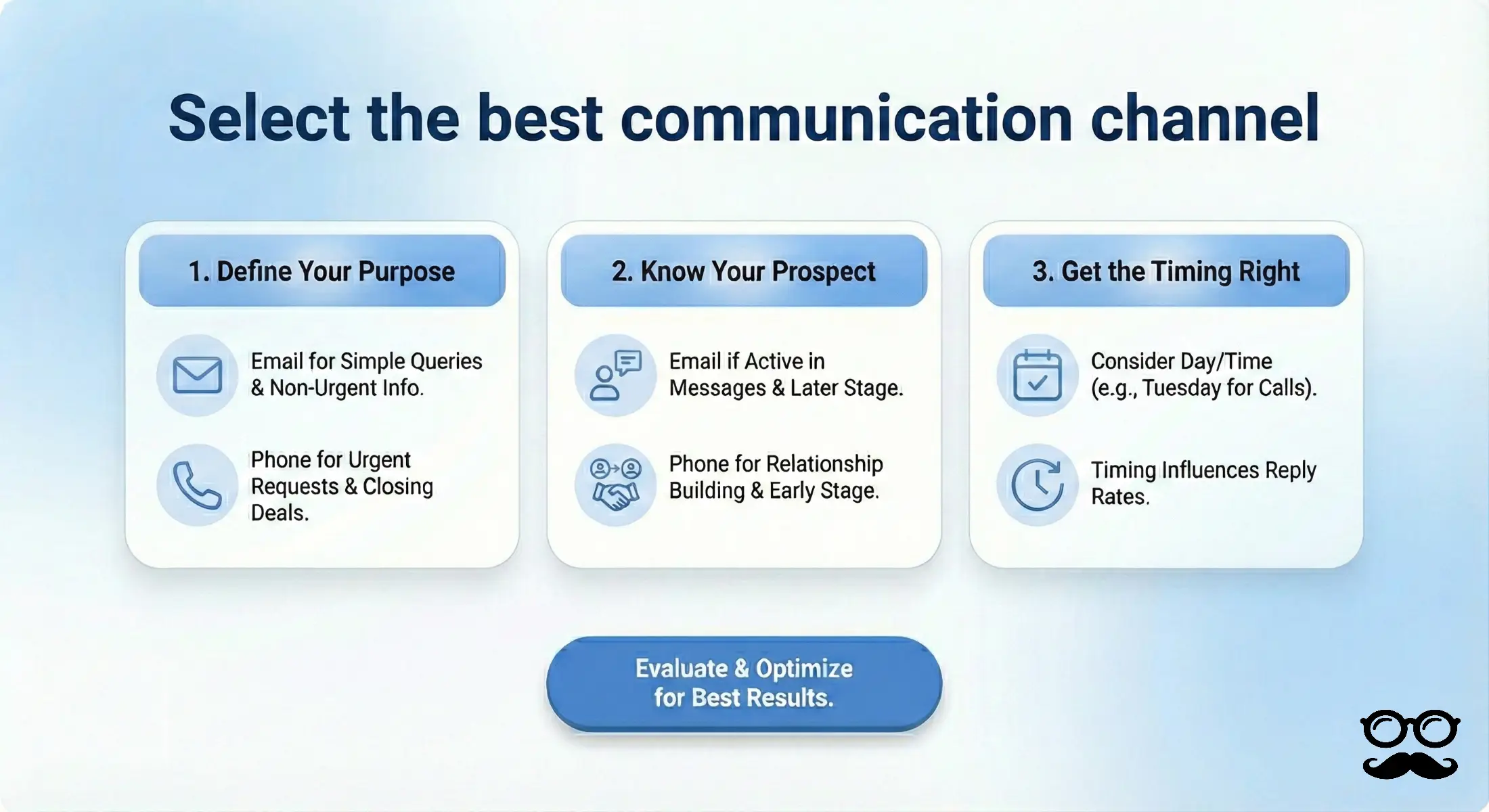
In every part of the sales process, there is a particular time for email and a particular time for a phone call. By finding out which communication method, when you need it, will give you the key to success in sales.
Here are some ways to evaluate the situation:
1. Define your purpose
You should choose the method that accomplishes your aim of communication. In the abovementioned, do not use the email for big goals like closing a deal. In that case, the email might look lazy. But with simple queries, just go with emails.
The quality of being urgent to your request can act on the communication method. If you need a quick answer, call clearly to the prospect; nothing is better for this method in that situation. And keep in view that not everyone answers an email at the proper time. But when you do not need a quick response, then email is better for this purpose.
2. Use what you know about the prospect
It matters what kind of communication method your prospect favors. There are multiple facts on which to exert the prospect favors; it also includes the status of the person, designation, industry, stage of life, etc.
Also, if you have previously communicated with a prospect many times and that person has been active through personalized messages, email may be a better choice. But if your prospect is in the first stage of the marketing method and you are trying to create the relationship, a phone call will be more effective.
3. Get the timing right
Selecting the better communication method is not only about the condition. It’s about timing also. In a week, day (Tuesday performs best for sales calls), or even the month and year could influence reply times for your outreach.
When you are preparing your sales outreach policy, be assured you look through all of the possible factors and circumstances that could play into the possible outcome. Choosing the better communication method means you will be more likely to get the best.
Ready to optimize your sales outreach? Start a Free Trial or Book a Demo to see it in action.
Start Free TrialFrequently asked questions
What are some outreach methods besides phone and email?
Other outreach methods that work well include:
- Personalized social media messages (42% response rate versus email's 26%)
- Short video introductions
- Direct mail with a handwritten note
- Hosting or joining local events and webinars
- Partnering with industry influencers for referrals
Using multiple channels keeps your outreach fresh and helps you connect with prospects where they prefer to engage.
What is the 3-3-3 rule in sales outreach?
The 3-3-3 rule keeps your outreach focused and consistent. Pick your three strongest benefits, aim them at three clear buyer groups, and use three channels—for example, phone, email, and social messages.
Sticking to “three of each” makes your message easy to remember and easier to scale. Tools like Meet Alfred help you schedule and track all these touches from one dashboard.
What is the 2-2-2 follow-up rule?
The 2-2-2 rule suggests following up 2 days, 2 weeks, and 2 months after your first outreach, as it typically takes more than 12 touches to reach a prospect. Each touchpoint should provide value—such as thanking the prospect, sharing a relevant resource, or offering help. This steady cadence keeps you top of mind without overwhelming your prospect.
What is the 70/30 rule during a sales call?
The 70/30 rule recommends that during a sales call, you talk for about 30% of the time and listen for about 70%. Giving prospects space to describe their goals and challenges helps you respond more effectively and builds trust throughout the conversation.
[author-box]Related Articles



Use Meet Alfred to get customers to find you!
Speak to one of our Automation Experts today
Start seeing results!