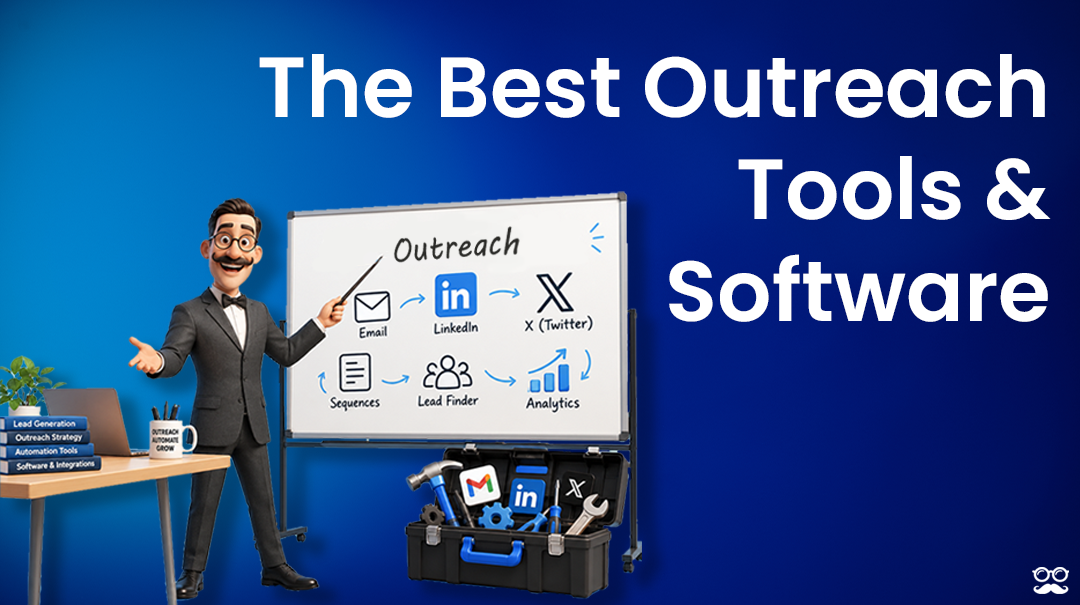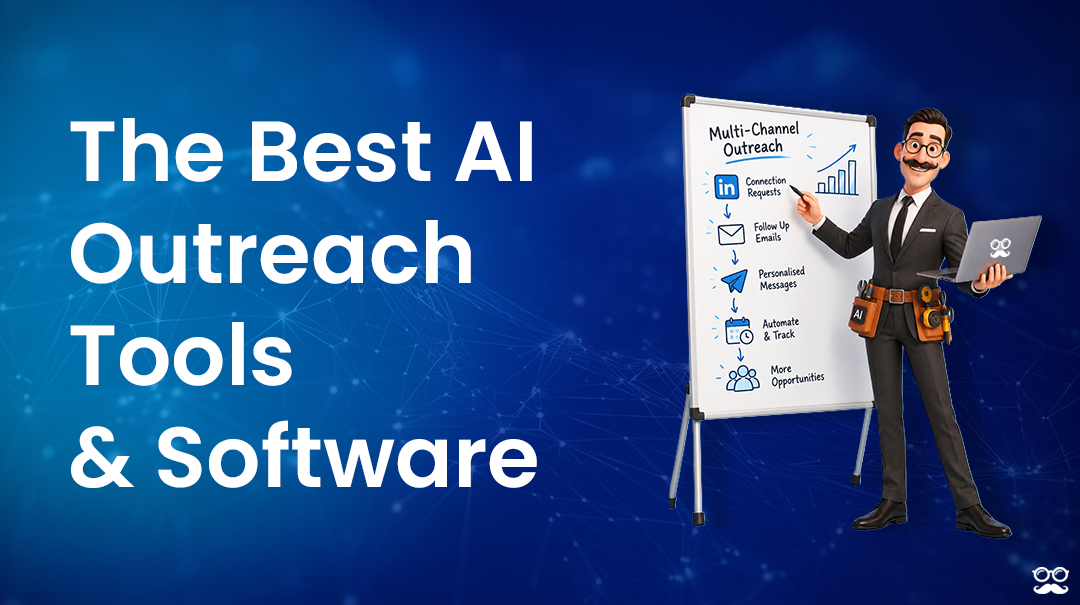







A sales rep's day splits into five jobs: working out who to contact, researching them, writing the message, chasing the follow-up, and handling whatever comes back.
AI sales tools take over one or more of those jobs, and which ones a tool covers is what decides whether you're buying software your team operates or an agent you hand the work to.
TL;DR
- Meet Alfred is the best AI sales tool in 2026 for sales teams, agencies, recruiters, and solo founders, because the AI handles prospect discovery, message personalization, sending behaviour, and reply detection inside one subscription that already covers LinkedIn, email, and X.
- Sbl.so and 11x sell the agent as the product itself: Sbl.so works LinkedIn and WhatsApp on sending profiles it supplies, while 11x runs Alice on email and social with Julian taking the phone.
- Salesforge and Reply.io sell an agent too, but as a line item above a sending platform: Agent Frank from $499 a month, Jason from $500.
- Lemlist and We-Connect put the AI inside the platform instead: lemAgent researches accounts and cleans data, and We-Connect's AI drafts the outbound copy and answers the replies.
- Clay sits a layer below the rest and supplies the data: Claygent does the account research, and one contract covers more than 200 data and AI vendors.
- La Growth Machine writes a fresh opening line for every LinkedIn voice message, and PhantomBuster writes against whatever signal a lead showed across more than 15 sources.
What are the best AI sales tools in 2026?
Meet Alfred takes the top spot among AI sales tools in 2026, putting the model on four separate jobs inside one campaign that already runs across LinkedIn, email, and X, with Sbl.so second for founders handing the whole motion to an agent and Salesforge third for email-led teams that want the AI SDR and the mailbox infrastructure from one vendor.
Here’s the full shortlist of vendors:
Four tests decided which tools made the list:
- The AI has to do sales work, not describe it: A dashboard summarizing last quarter didn't qualify. The tool had to take over a job a rep would otherwise do by hand, whether that's building the list, writing the message, chasing the follow-up, or working the reply.
- The feature has to be shipped, not promised: Plenty of vendors in this category market AI that turns out to be a waitlist. Everything named here is in general release, and where a particular tier is marked coming soon, the pricing says so.
- Pricing has to be describable: Published rates were preferred, though a documented meter I can explain honestly was enough, which is how Clay and PhantomBuster qualify. 11x publishes nothing at all and is here anyway, because it's the only tool on this list where an AI agent holds the phone conversation itself.
- The output has to reach a real prospect: Research and enrichment tools only made the cut if what they produce feeds outreach directly. Clay and PhantomBuster both do.
➡️ A note on scope: I've evaluated these AI sales tools as the top of the funnel, from finding the buyer through to the booked meeting. Conversation intelligence, forecasting, CRM copilots, and meeting assistants are real categories with real AI in them, and they're absent here because the buying question they answer is a different one.
#1: Meet Alfred
Meet Alfred is the best AI sales tool in 2026 for agencies, recruiters, solo founders, and in-house sales teams, as the AI works at four points inside one platform:
- It finds the prospects.
- Personalizes every message.
- Paces the sending.
- And stops a campaign the moment somebody replies.
LinkedIn, email, and X outreach run on that same subscription, alongside a shared team inbox and a social post scheduler.
Disclosure first: Yes, this is our product. Where another tool on this list does a job better than we do, I'll name it and say why.
Reuters, Samsung, HSBC, Oracle, and Salesforce are among the companies with registered users on the platform.
How can you build your first automated campaign in 4 steps?
Let me walk you through how our platform works and what you can expect:
Step 1: Connect the account and set the sending rules
You connect the LinkedIn profile first, and two-factor authentication is completed inside the dashboard.
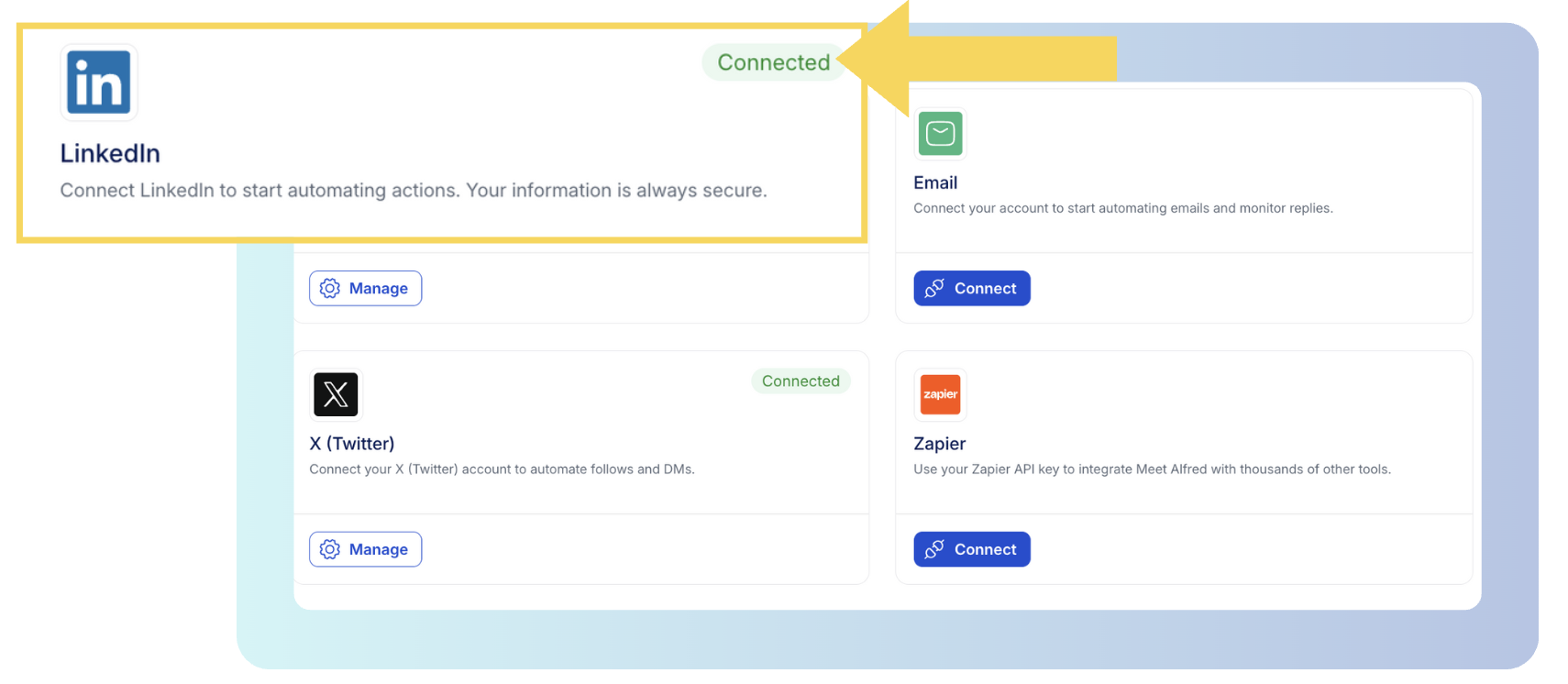
Next comes the daily ceiling on connection requests. It can be set as high as 100 a day and still stay inside safe parameters.
Working hours and the time zone they follow are configured on the same screen, which keeps outreach on the prospect's clock and not yours.
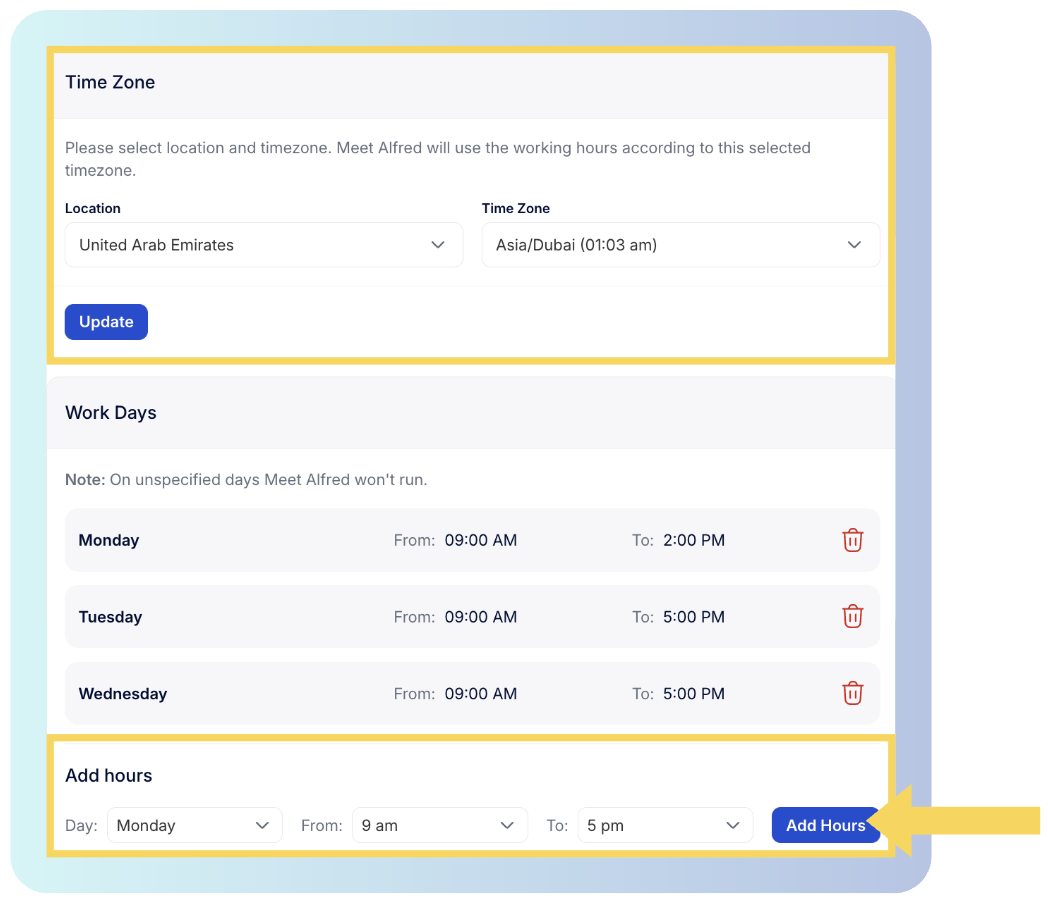
Auto-withdrawal clears invitations that were never accepted, and those withdrawals are reported in an analytics view of their own.
➡️ What the AI does here: the ceiling is yours, but the spacing underneath it isn't fixed.
Every action type gets its own randomized interval, so the account's daily pattern never repeats the way a timed script would.
Step 2: Choose who the campaign talks to
Three kinds of sources feed a campaign:
Engagement sources pull from activity you can already see on LinkedIn: post reactions, event attendees, group members, newsletter subscribers, and company pages.
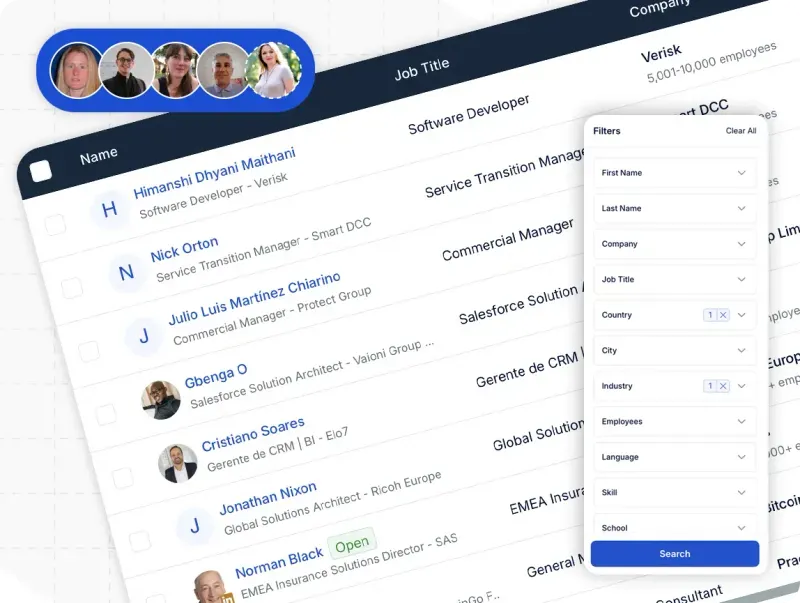
Search sources cover LinkedIn search and Sales Navigator, filtered on job title, industry, location, keywords, and language. A sample of the results appears before you fix the lead count.
CSV uploads and your own first-degree connections work as sources too.
AI Lead Finder is the third, and it has a screen of its own outside campaign setup.
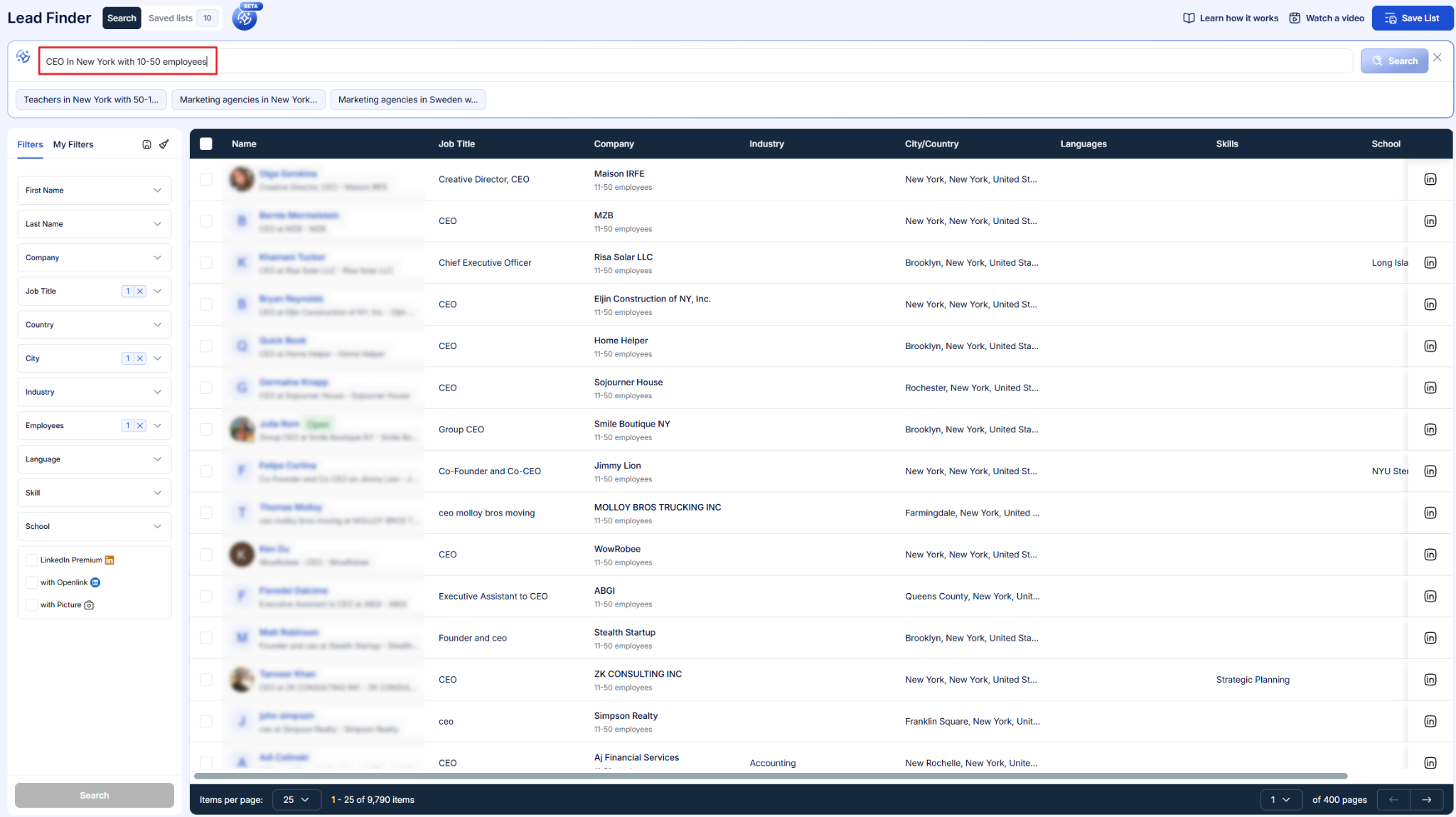
Plan ceilings apply to results: 1,000 on Basic, 5,000 on Pro, 10,000 on Team.
Anything it saves becomes a selectable source when the campaign gets built.
➡️ What the AI does here: Lead Finder applies your filters against LinkedIn and reaches decision-makers past the point where LinkedIn's own search stops returning results.
No manual research and no credits have to be spent at a separate prospecting vendor.
Step 3: Lay out the sequence
The sequence is the ordered set of actions that everybody on the list will move through.
Build it from scratch, or open a saved template and rework the copy for this audience.
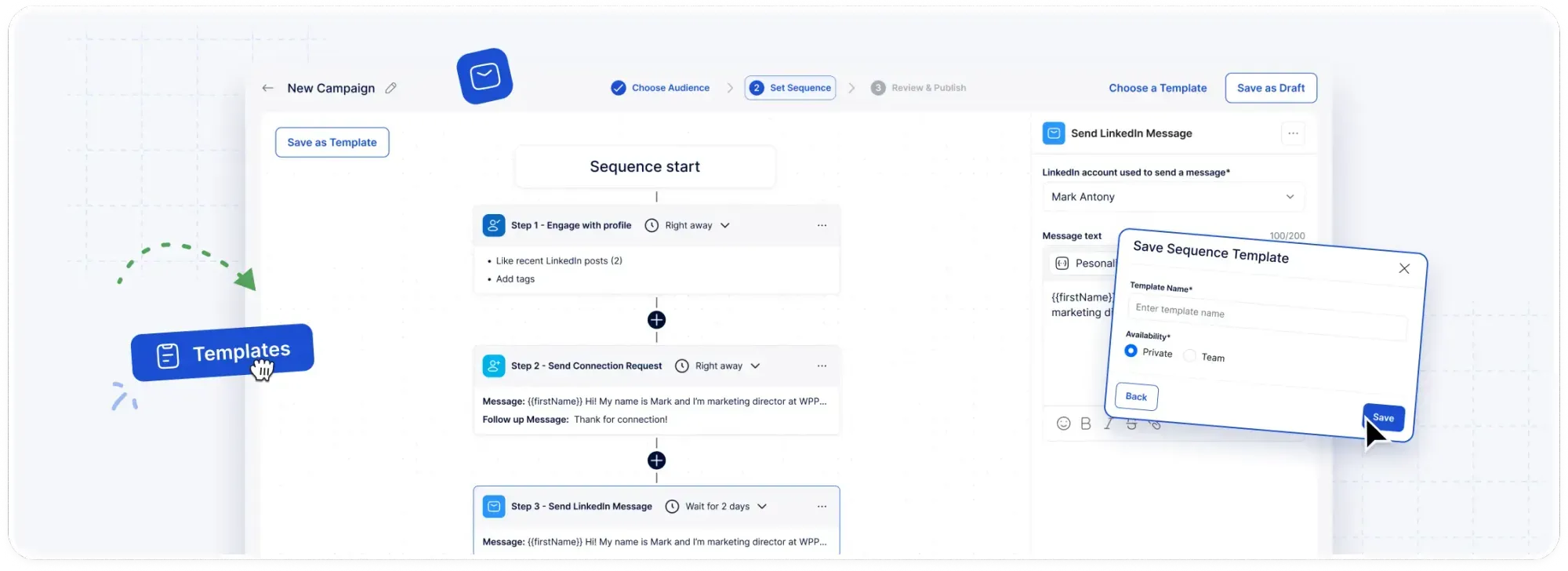
One common shape runs a profile view, then a like on something the prospect posted recently, then a connection request carrying a personal note, then a follow-up message if the thread stays quiet.
Smart delays go between each of those.
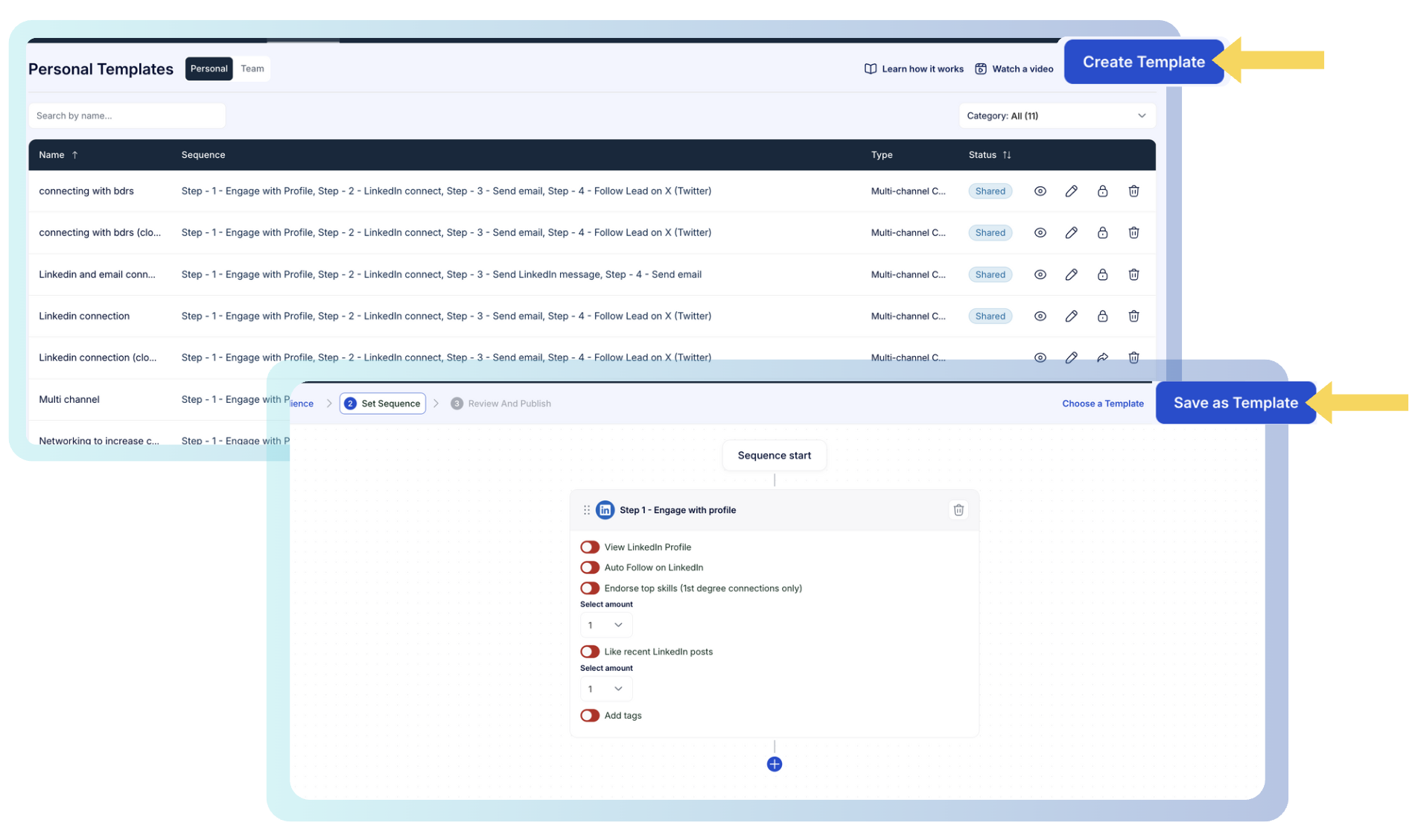
Pro adds email, X, and InMail as steps in the same builder. Any sequence that performs can be saved and shared, so a play stops living with one rep.
➡️ What the AI does here: details including name, title, company, and role are read off each prospect's profile and written into the copy at send time, so one sequence leaves as a different message for every person on the list.
CSV imports bring custom fields in for the same job, and more than 600 templates are available as starting points.
Step 4: Handle what comes back
Every conversation across the team collects in the Smart Inbox.
LinkedIn messages, InMails, and Sales Navigator threads all land in the same place, for every rep on the account.
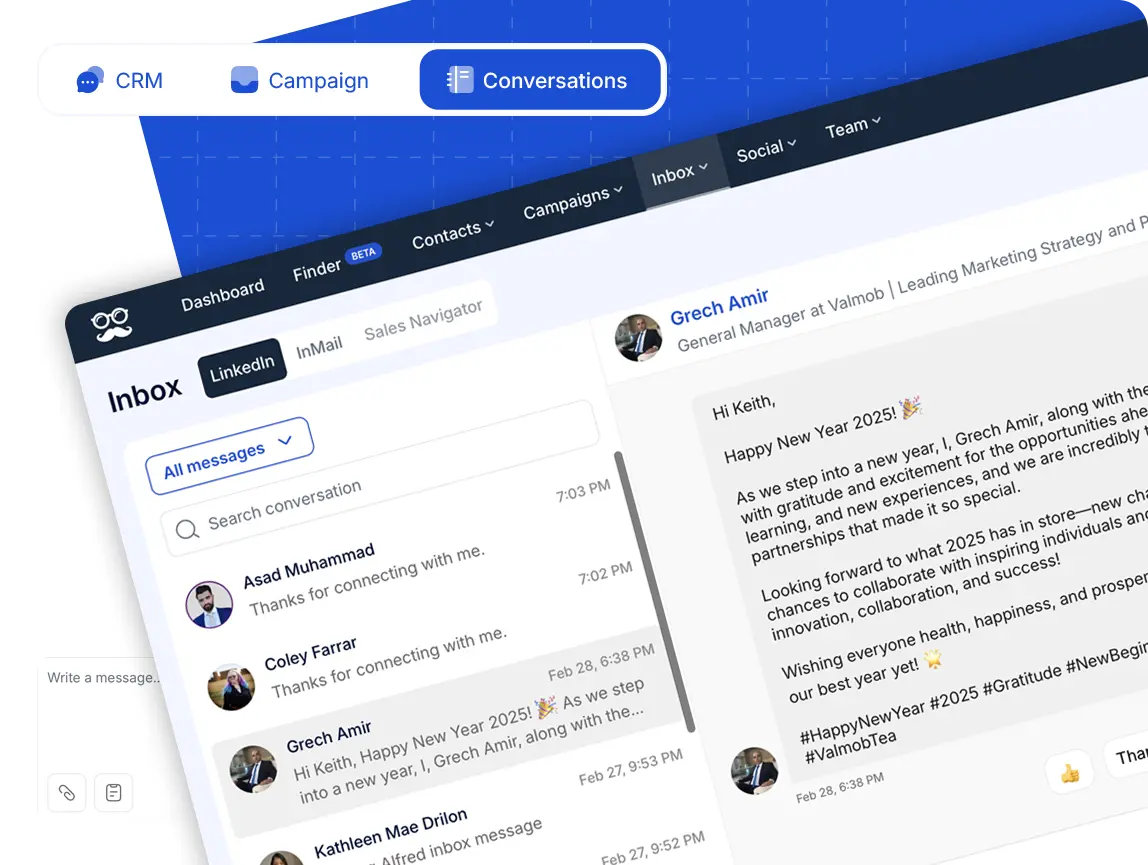
Contact details appear beside each thread, covering job title, company, and location.
You can tag a contact, leave a note, attach a file, blacklist someone who doesn't fit, or return a lead to a campaign, all in the same view. Replies export in bulk, either a selection or the lot.
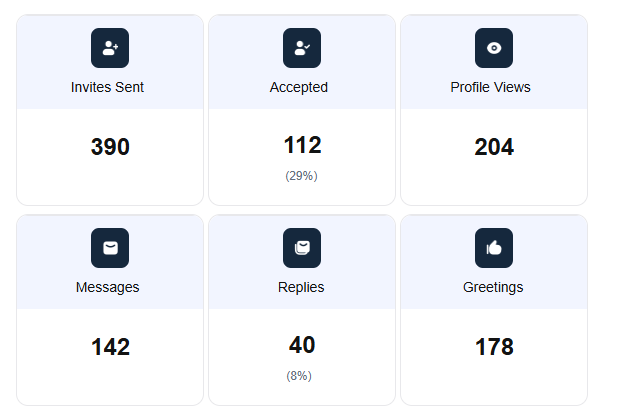
Team analytics break the activity down per member, covering connection requests, follow-ups, and replies.
➡️ What the AI does here: the moment a contact answers, reply detection halts their campaign, so an automated follow-up never reaches somebody who has already written back. Inside multi-channel sequences, the platform also identifies a thread that needs a person and returns it to the team.
Running several client accounts without sharing passwords
Impersonation is the feature that makes multi-account work practical. A manager handles outreach and conversations on behalf of any connected team member with one click, and no password ever changes hands.
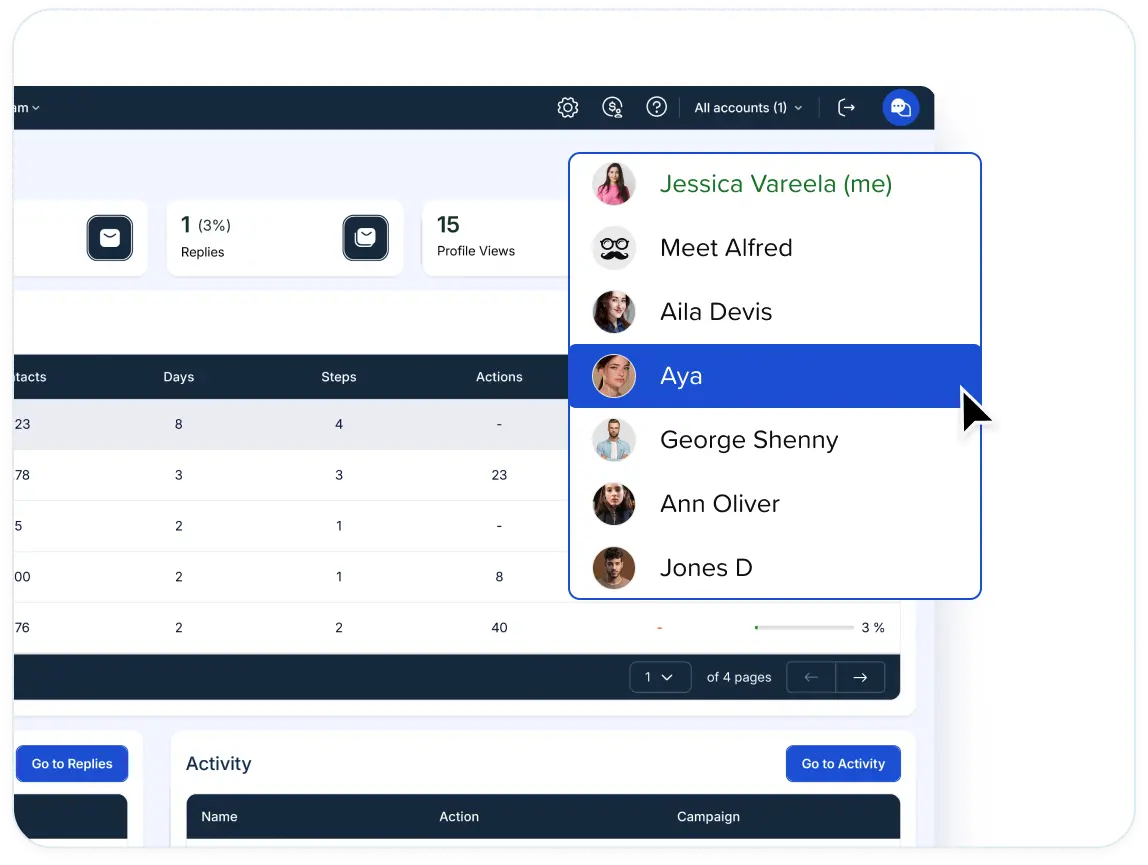
It works from the team management area, without either party logging out.
For an agency, one operator can therefore cover several client profiles from a single login. Nothing is shared, and nobody logs out between accounts.
Groups sort accounts by client, campaign, or project goal, and role-based permissions define what each member can reach.
White label unlocks at five seats: your logo, your colors, a domain such as app.youragency.com, and system notifications leaving from an address you control. It configures in minutes without a developer, and reverting to the standard Meet Alfred domain takes one click.
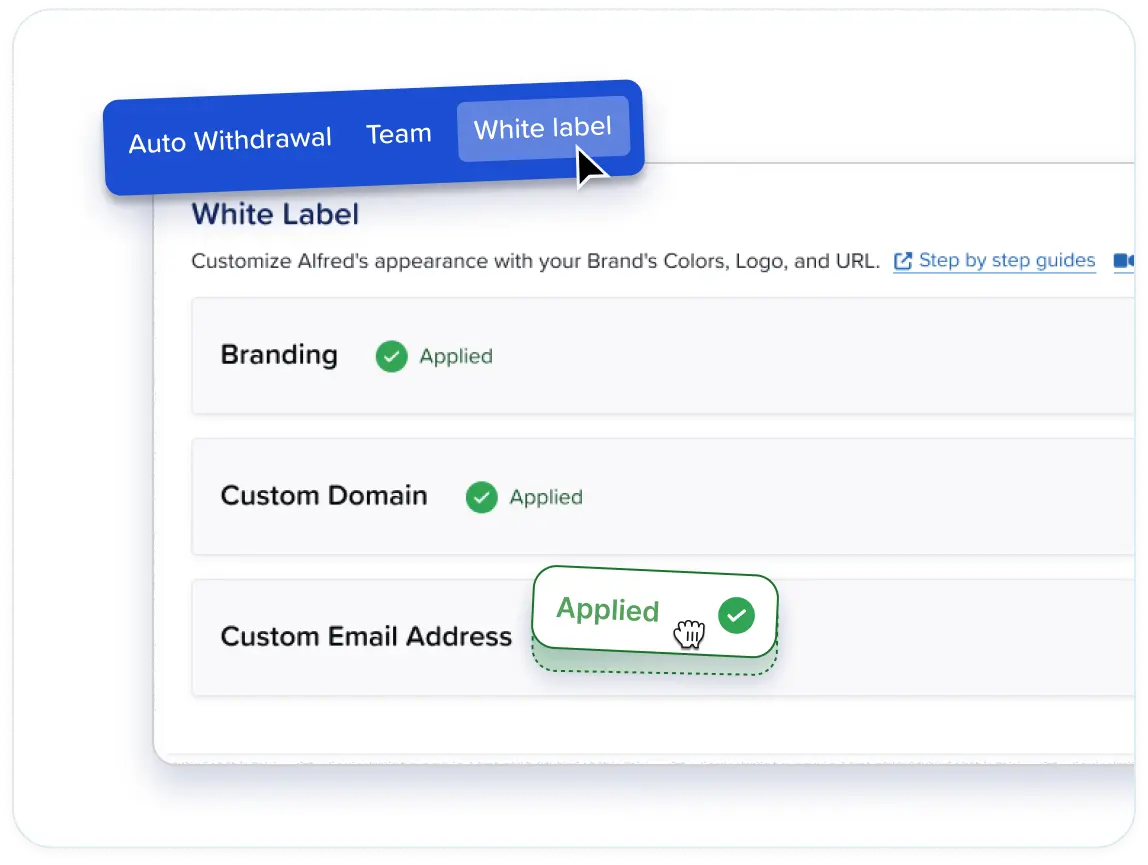
Ten seats adds priority support, a named account manager, migration and onboarding help, and volume-based pricing.
How is Meet Alfred different from a generic AI sales tool?
Meet Alfred differs from a generic AI sales tool on where the AI sits, how much of the surrounding stack you buy separately, and what the platform does to protect the sending account.
The table below compares Meet Alfred against the typical shape of an AI sales tool in this category:
Pricing
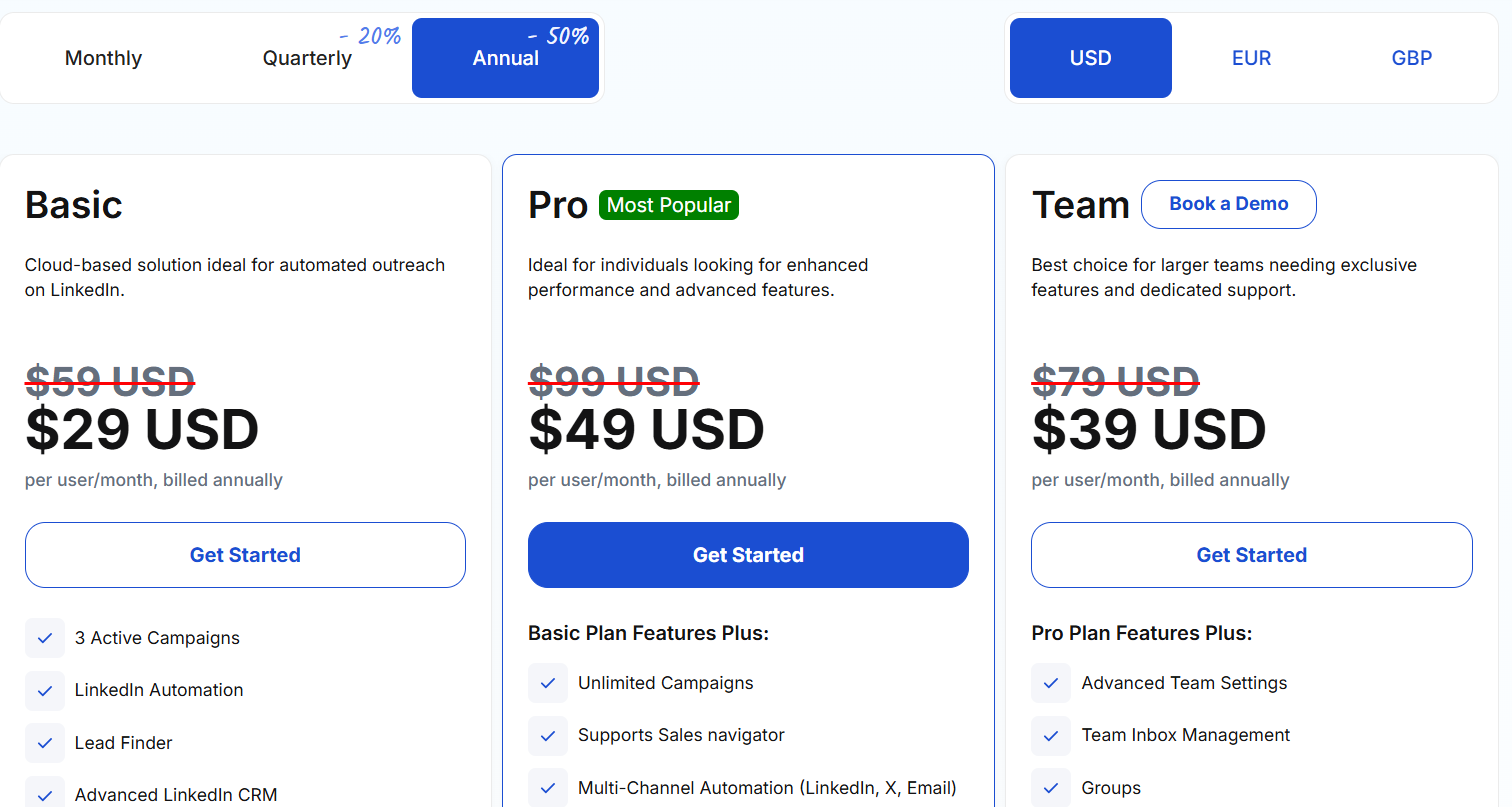
Annual billing takes 50% off, quarterly takes 20% off, and the platform bills in USD, EUR, or GBP.
Here’s how that looks:
- Free trial: seven days with the full feature set open, no credit card, cancel anytime.
- Basic, from $29/user/month billed annually: LinkedIn automation in the cloud across three active campaigns. You also get the advanced LinkedIn CRM, the Smart Inbox, message templates, automated greetings, custom tags, notes, data export, and Lead Finder holding 1,000 results.
- Pro, from $49/user/month billed annually: the campaign limit comes off, and you pick up Sales Navigator support, InMail automation, sequences spanning LinkedIn, email, and X, campaigns built on groups, events, and post engagement, CSV campaigns, social post scheduling, Zapier and webhooks, custom personalization snippets, attachments, and Lead Finder at 5,000 results.
- Team, from $39/user/month billed annually: advanced team settings, team inbox management, account groups, and Lead Finder at 10,000 results. Five seats brings white label. Ten brings volume pricing, a named account manager, migration help, and priority support.
Pros & Cons
✅ Four AI jobs inside one campaign, covering discovery, personalization, pacing, and the reply, on a proprietary engine running since 2020.
✅ Pro upward puts LinkedIn, email, and X outreach plus the social scheduler on a single subscription. No proxies to buy separately, no email credits to meter.
✅ Email leaves through your own SMTP or IMAP connection, so your mailbox sets the ceiling.
✅ Five seats unlocks both white label and impersonation, on a published tier and not a quoted one.
❌ The AI supports a campaign your team runs. It won't book the meeting on its own.
#2: Sbl.so
Best for: Founders and lean teams with nobody to hand outbound to, who want campaign volume kept off their own LinkedIn profile.
Similar to: HeyReach, Reply.io.
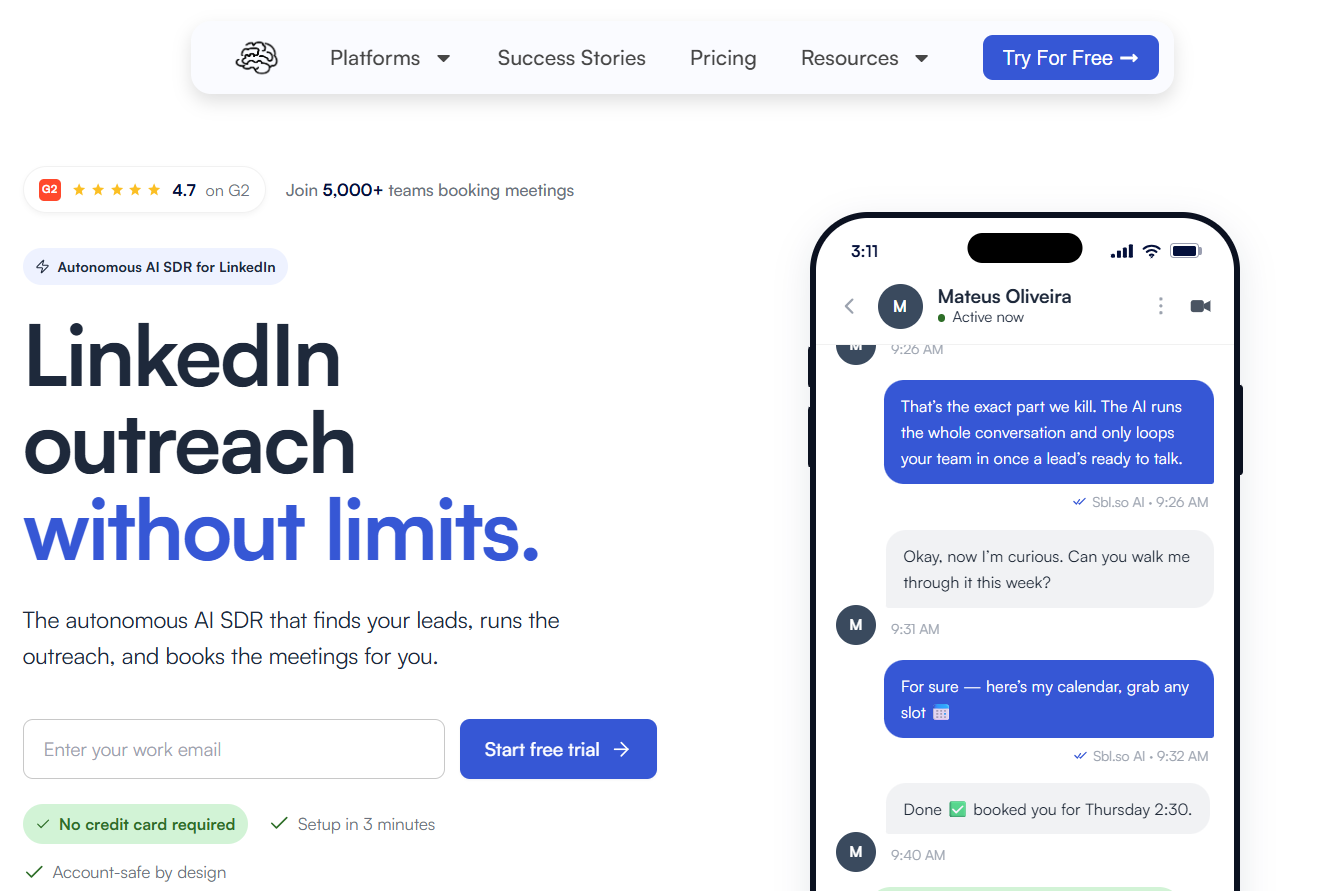
Sbl.so is an AI sales rep for LinkedIn. You describe the buyer, and it assembles the list, opens the conversations, works the replies, and drops the meeting into your calendar.
Features
- Lists built from signals: A funding round, a job move, fresh profile activity, or engagement on a competitor's post all feed the list, which rebuilds daily and scores every name against the buyer you described.
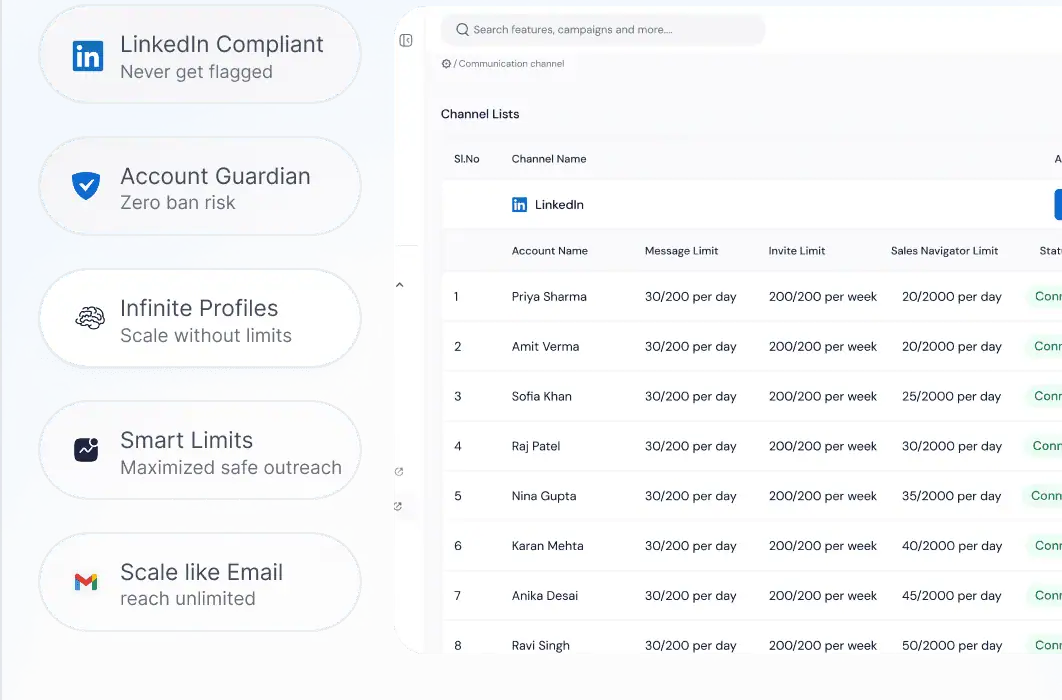
- Sending profiles come from the vendor: Warmed accounts are provided, and the day's volume divides across them.
- The AI takes the conversation: More than 100 languages on replies, a voice note cloned from your own, and a handover to a person once the lead heats up.
- Inbox, CRM, and calendar in the box: Booking, one team inbox, live analytics, workspaces without limit, and a mobile app.
- Connects out to: HubSpot, Salesforce, Pipedrive, Slack, Zapier, n8n, and Make.
Pricing
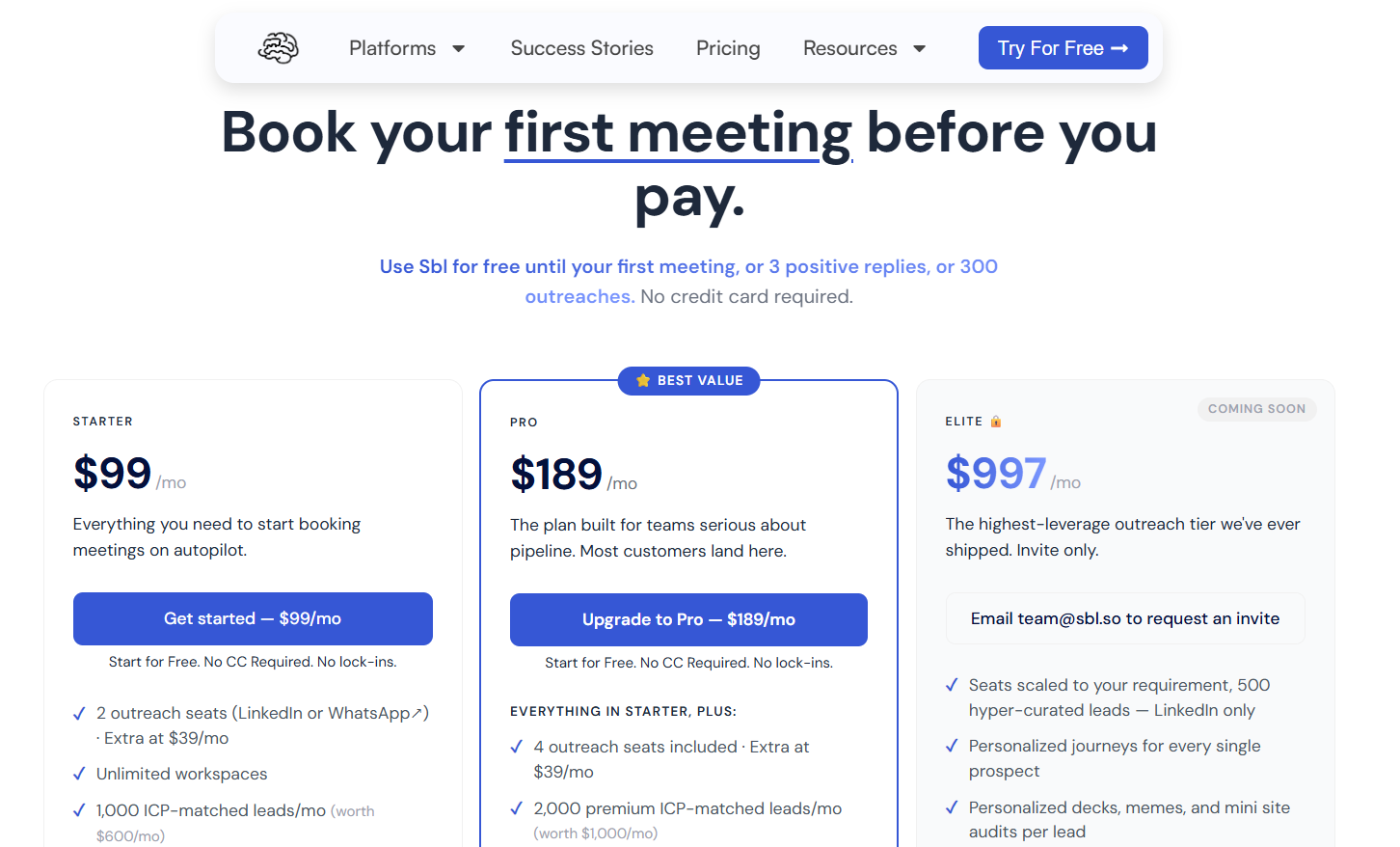
A seat at Sbl.so means one LinkedIn or WhatsApp account, and each extra seat costs $39 a month:
- Free trial: no card, and it stays free until whichever arrives first out of your first meeting, three positive replies, or 300 outreaches.
- Starter, $99 per month: two outreach seats, a monthly 1,000 ICP-matched leads, signals off comments and reactions on your own posts, AI chat replies in more than 100 languages, Sales Navigator extraction with no cap, workspaces without limit, two team members, and priority support.
- Pro, $189 per month: four outreach seats and 2,000 premium leads a month, with premium signals for job changes, funding, and competitor monitoring, rich media carrying the cloned voice, the built-in CRM and its export, custom webhooks, and ten team members.
- Elite, $997 per month: invite-only and marked coming soon, seats scaled to the account, 500 hyper-curated LinkedIn leads, and a journey built per prospect.
- Enterprise, custom: shaped to a particular workflow, volume, or compliance requirement.
Pros & Cons
✅ Campaign volume never touches your personal profile.
✅ Buying signals assemble the list and keep it current day to day, so nobody is maintaining a spreadsheet.
✅ A conversation can run unattended all the way to a calendar invite, which fits a founder selling with no SDR on payroll.
❌ Two live channels today: LinkedIn and WhatsApp.
❌ Email automation is still on the roadmap.
#3: Salesforge
Best for: Email-led teams and agencies that scale by adding senders and not seats, and want mailbox infrastructure under the same login.
Similar to: Lemlist, Sbl.so.
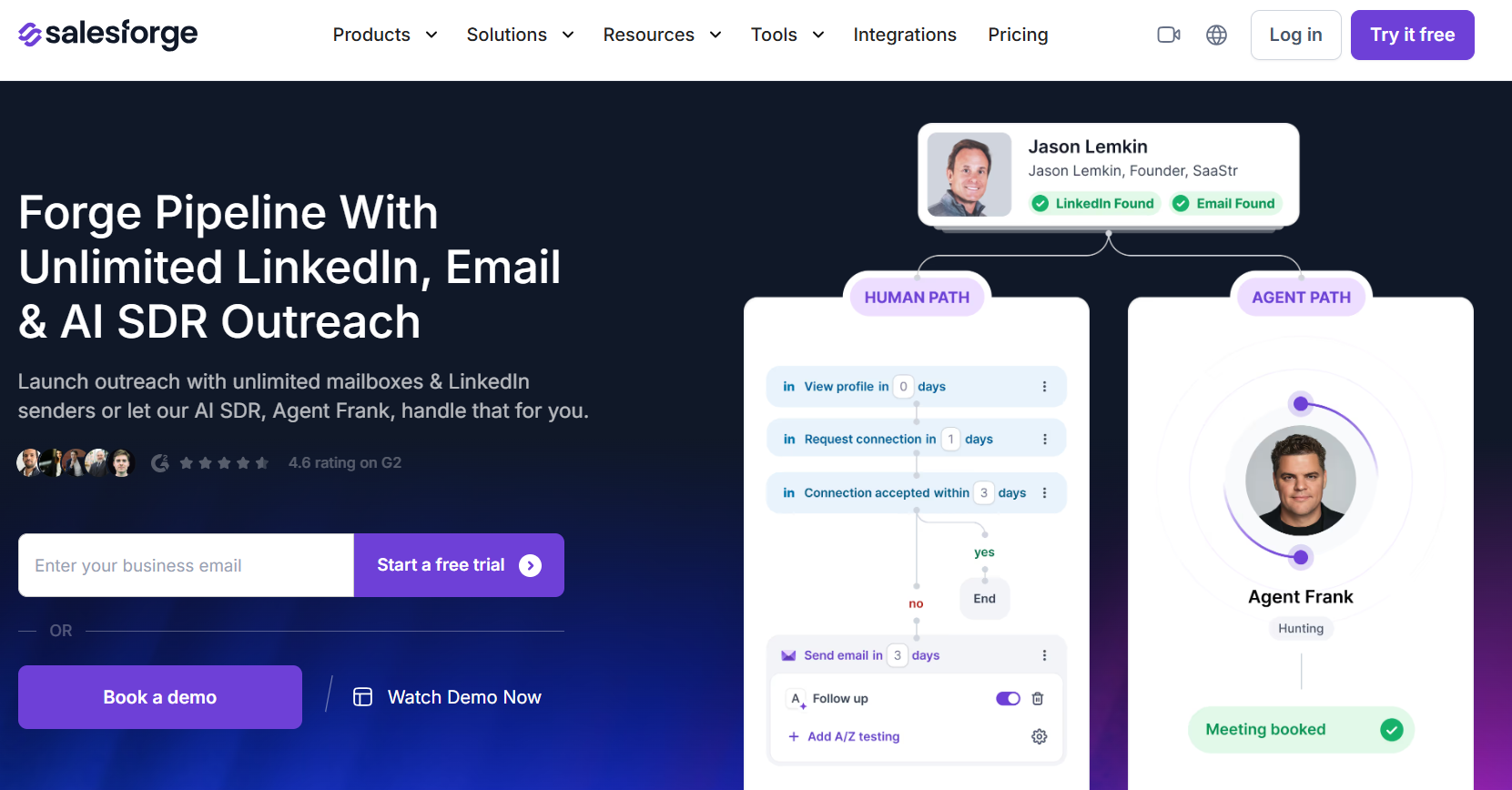
Salesforge sends email, and the same login covers mailbox infrastructure, warm-up, and lead sourcing.
Features
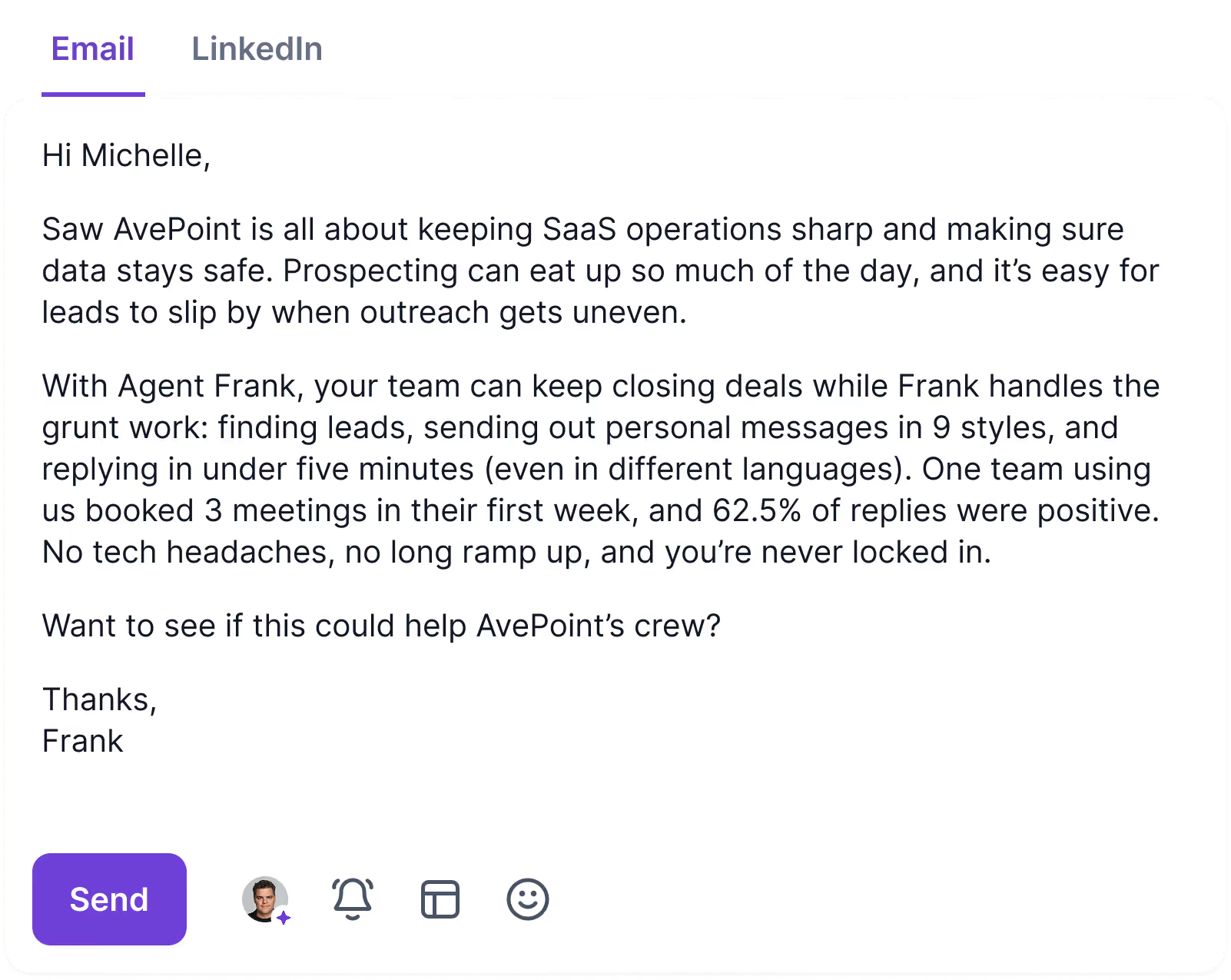
- Agent Frank: The AI SDR. It prospects, writes, chases, and books, working in co-pilot with your approval or on autopilot without it, across more than 20 languages.
- Senders without a ceiling: Both paid plans carry unlimited mailboxes, and Growth lifts the cap on LinkedIn senders and users too.
- Primebox: Email and LinkedIn replies arrive in one thread, matched correctly even when a prospect answers from a mailbox you never wrote to. Sentiment scoring runs on top.
- Warmforge: Free unlimited warm-up on mailboxes the vendor controls. Placement tests and domain health alerts come with it.
Pricing
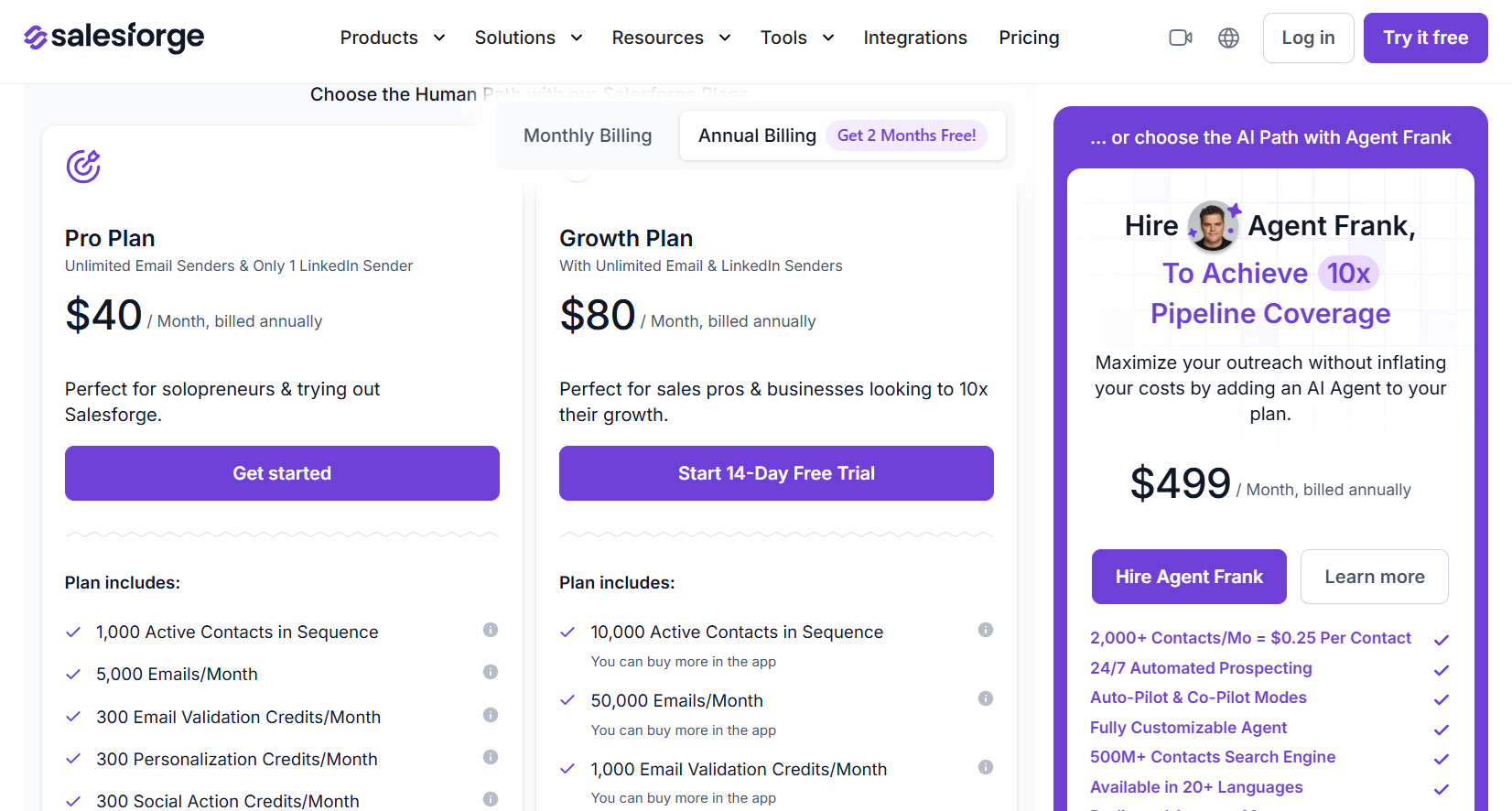
The bill follows sending volume and active contacts, and the AI SDR is a separate line:
- Pro, $40 per month billed annually: 5,000 emails a month against 1,000 active contacts, one user and one LinkedIn sender, with mailboxes and premium warm-up both uncapped.
- Growth, $80 per month billed annually: 50,000 emails and 10,000 active contacts, no limit on LinkedIn senders or users, multi-language sequences, split testing, API access, and priority support.
- Agent Frank, from $499 per month billed annually: autonomous prospecting against 2,000 contacts a month, a dedicated account manager, and a shared Slack channel.
- Credits on Growth: a monthly 1,000 each for email validation, personalization, and social actions, toppable up in-app.
Pros & Cons
✅ Growth removes the cap on LinkedIn senders and users, so headcount stops driving the budget.
✅ Mailboxes, warm-up, lead sourcing, and sending come from one vendor with one support team behind them.
✅ Primebox catches a reply even when it arrives from an address you never contacted.
✅ Agencies get white label.
❌ Credits meter personalization and social actions.
❌ The full stack is several products to learn.
#4: 11x
Best for: Mid-market and enterprise GTM teams that want outbound and inbound both run by AI workers, with live phone conversations among the channels.
Similar to: Sbl.so, Salesforge.
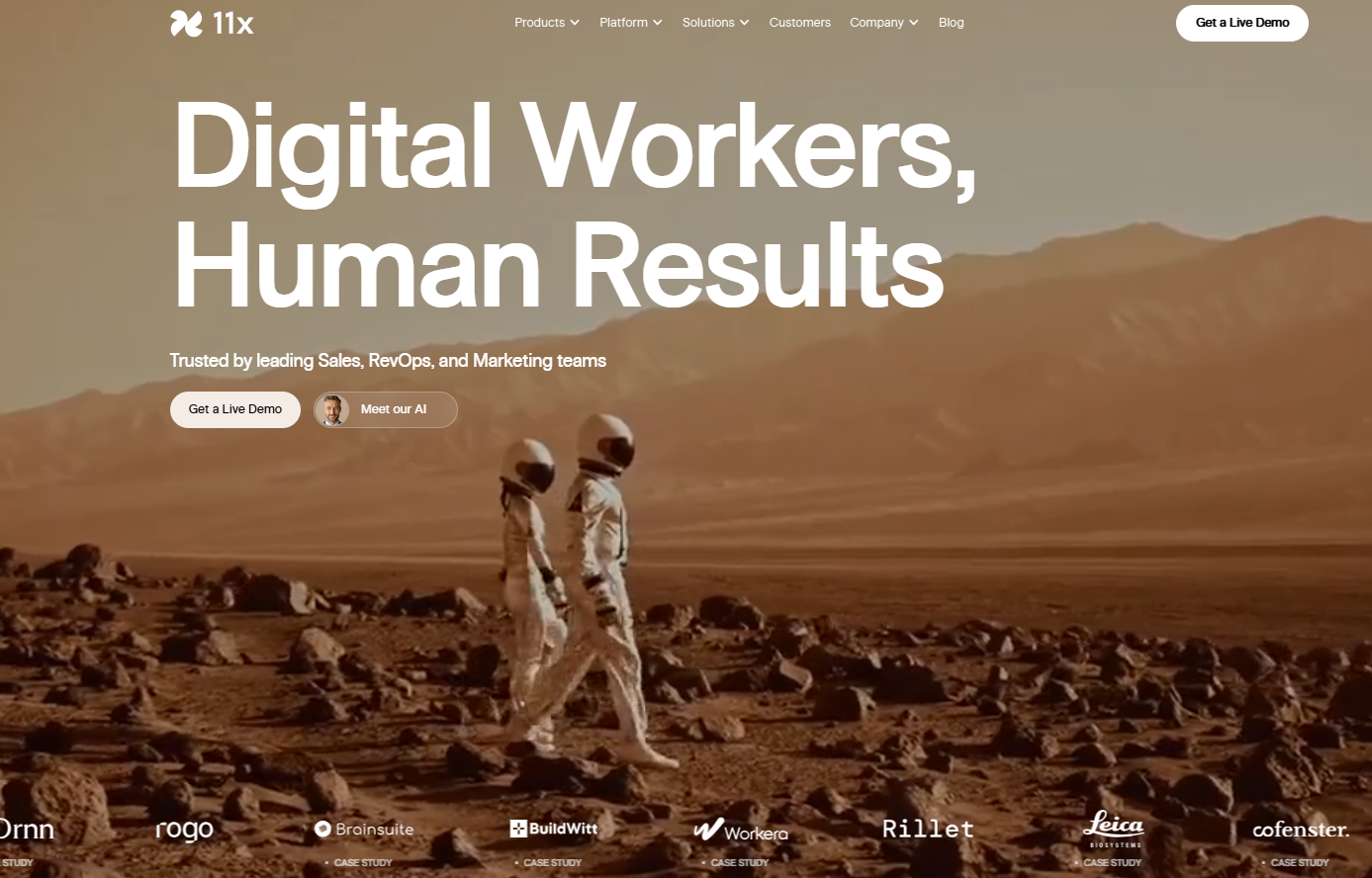
11x sells two AI digital workers that run as one sequence. Alice takes outbound across email and social. Julian takes voice, SMS, WhatsApp, email, and chatbot, on inbound as well as out.
Features
- Alice, the AI SDR: She engages prospects across channels, handles the replies, drives qualified meetings, and builds pipeline. Autopilot is an available mode, and 11x customers describe running her that way.
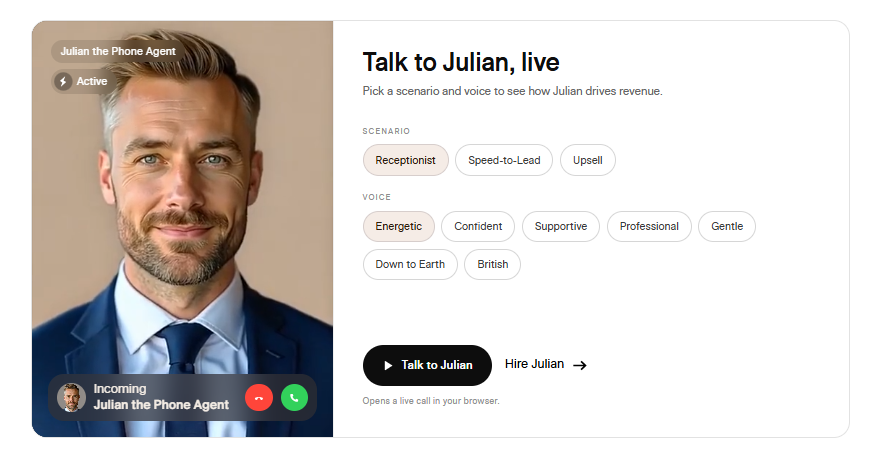
- Julian, the AI phone agent: Live phone conversations on inbound and outbound. Scenarios are configurable across reception, speed-to-lead, and upsell, and you pick the voice.
- Channels that pick up from each other: A missed call triggers a text, no reply triggers an email, a completed call sends a confirmation, and a no-show triggers re-engagement. You set the intervals and the attempt limits. Channel selection follows the region, with WhatsApp in the EU, APAC, and LATAM, SMS where it performs, and voice where pickup rates are highest.
- Identify and research: Signals from more than 50 data sources get filtered against your ICP, then every prospect is enriched with company news, tech stack, org changes, and competitive signals. Website visitor tracking, lead qualification, and intelligent lead routing are part of the same layer.
- Deliverability built in: Email deliverability infrastructure, phone spam detection, branded voice calling, and WhatsApp Business Profiles. Mailbox health and number management are handled in-platform.
- Enterprise controls: SOC 2 compliance and end-to-end encryption of customer data. Integrations cover Salesforce, HubSpot, Slack, Gmail, Google Calendar, and LinkedIn, and there's an API.
Pricing
11x does not publish pricing, as access starts with a live demo.
Pros & Cons
✅ Voice, SMS, WhatsApp, email, social, and chat all run inside a single sequence, with the next touch decided by what happened on the last one.
✅ Julian answers inbound as well as dialing outbound, so reception and speed-to-lead are covered by the same agent.
✅ Deliverability infrastructure covers mailboxes and phone numbers together. No second vendor needed.
❌ Budgeting starts with a sales call, since no pricing is published.
#5: Reply.io
Best for: Sales teams that want five channels inside one conditional sequence, with an AI SDR available on the upgrade path.
Similar to: Lemlist, La Growth Machine.
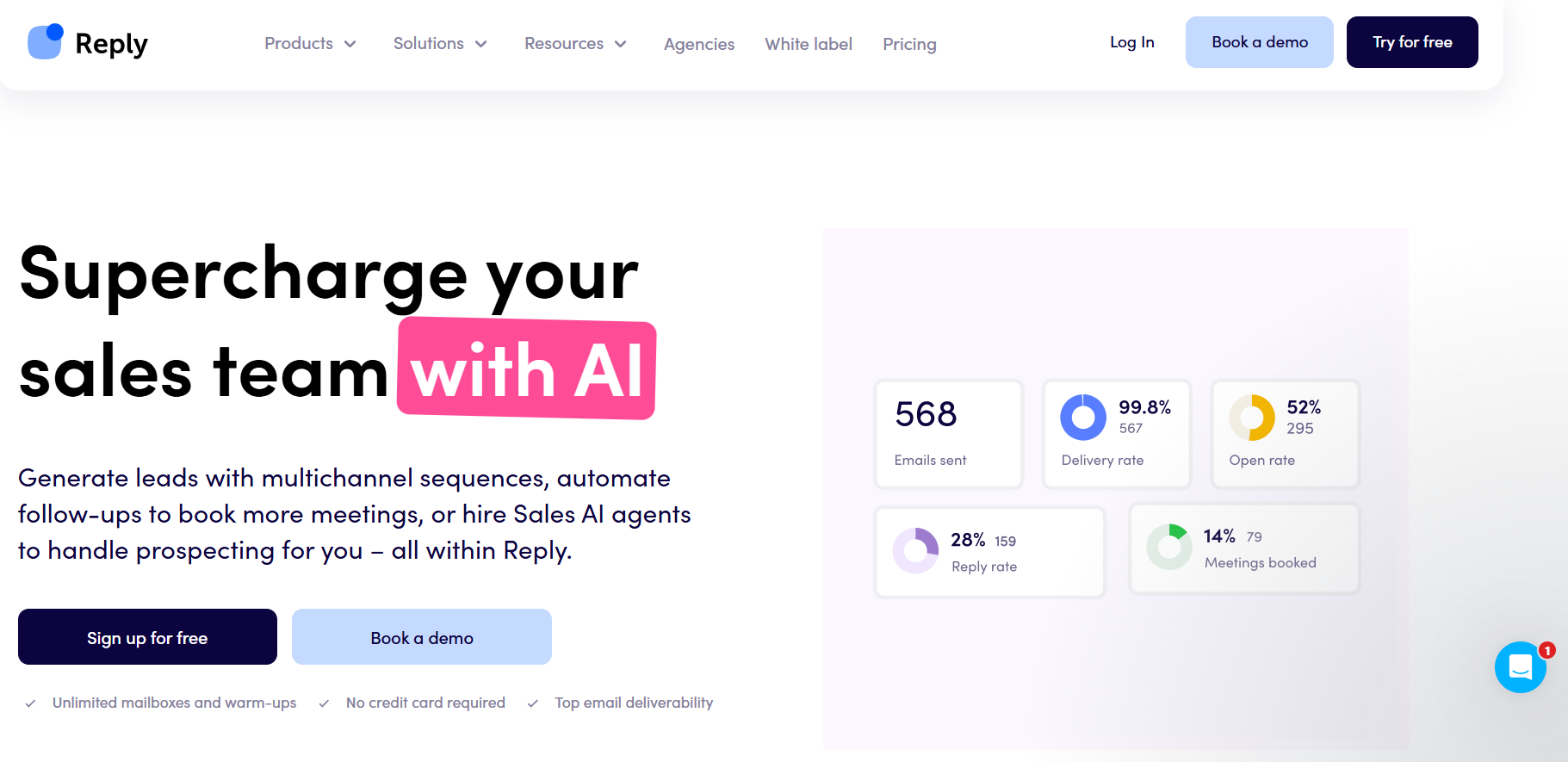
Reply.io is a sales engagement platform running email, LinkedIn, calls, SMS, and WhatsApp as steps in a single sequence.
Jason AI runs above that as a fully autonomous prospecting motion for teams that want one.
Features
- LinkedIn treated as a first-class channel: Invites, messages, InMails, voice notes, attachments, likes, follows, and skill endorsements each fire automatically or queue as a manual task waiting on your approval.
- Branching across channels: No answer on email routes the prospect to a LinkedIn touch and then a call, with the fork chosen from what that person actually did.
- Jason AI: The autonomous option, prospecting and working replies with no rep driving it.
- B2B data included: Contact search carrying buying-intent signals. Website visitor reveals are on every plan, up to 200 a month.
- Deliverability: Warm-up across unlimited mailboxes, DNS setup, custom tracking domains, inbox rotation, and domain purchase inside the app.
Pricing
Two shapes, depending on whether you're buying email volume or channel coverage:
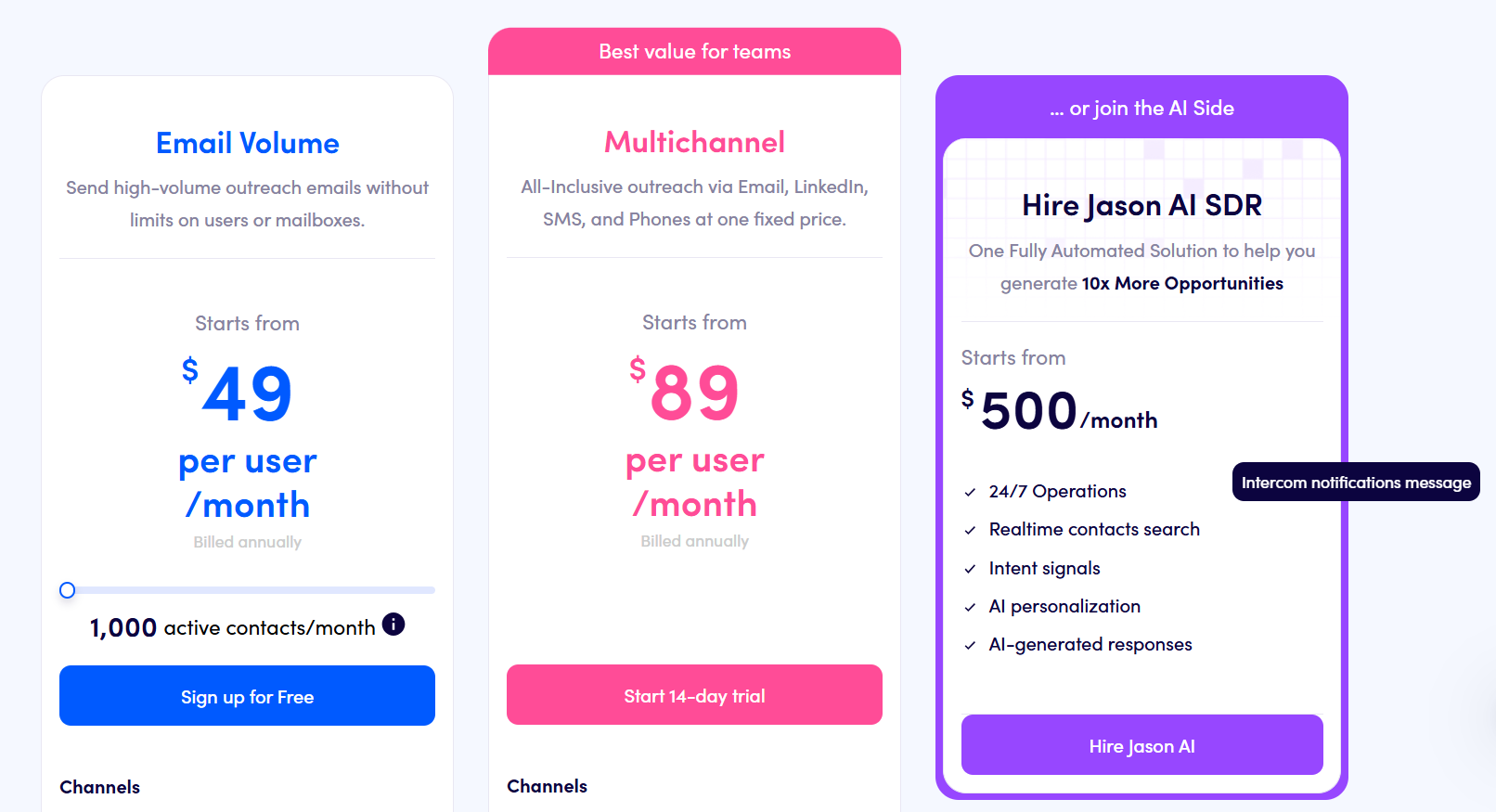
- Multichannel, from $89 per user per month billed annually: ten mailboxes with calls, SMS, and LinkedIn included, and WhatsApp as a semi-automated step.
- Email Volume, from $49 per month: 1,000 active contacts with no cap on users or mailboxes, where LinkedIn costs $69/month per account and calls with SMS run $29/month per user.
- Jason AI SDR, from $500 per month: prospecting and reply handling with no rep in the loop.
- Agency, from $166 per month: a client management dashboard for agencies.
- Free trial: 14 days across the platform.
Pros & Cons
✅ Five channels branch inside a single sequence, though LinkedIn and calling carry their own charge on top.
✅ Warm-up is bundled, and mailbox count follows a fair-usage policy set against your contact volume.
✅ The AI SDR is an upgrade on the same platform, so no second vendor is needed for it.
❌ Actions can't run in parallel inside one sequence, per a G2 review.
❌ No unified outbox, per the same review.
#6: Lemlist
Best for: Senders losing more replies to spam folders than to weak copy, who also want a dialer and WhatsApp in the sequence.
Similar to: Reply.io, Waalaxy.
Lemlist is an outbound platform built around inbox placement.
A single sequence can carry a prospect across email, LinkedIn, phone, WhatsApp, and SMS.
AI agents do the research underneath, and conditions pick the next step from what the prospect did.
Features
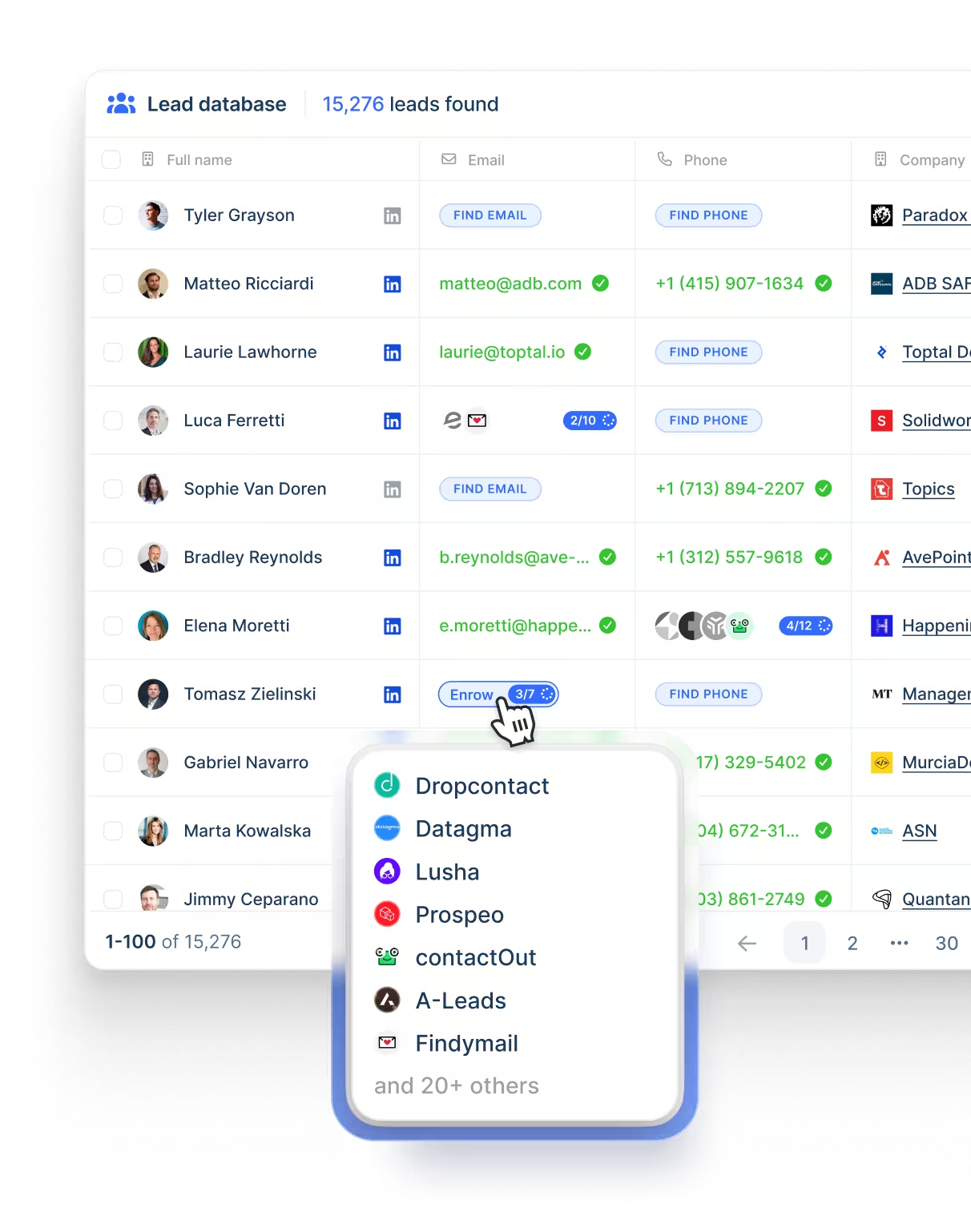
- The agents: lemAgent researches accounts and cleans records, while separate agents keep watch on hiring activity, role changes, funding rounds, and site visits.
- Five channels, one sequence: Email opens, a LinkedIn invite and a voice note follow, the phone rings, then WhatsApp chases. Conditions decide which of those any given lead is actually due.
- Deliverability Hub: Warm-up, inbox rotation, limit management, and DNS checks, with alerts arriving early enough to save a mailbox.
- The database: More than 650 million records. Address and phone lookup run over the top, charged in credits.
Pricing
Three paid plans, and a year up front takes 20% off:
- Email, $69 monthly at list or $55 yearly: 50,000 messages a month, the Deliverability Hub, the contact database, and no ceiling on users or email senders.
- Multichannel, $109 monthly at list or $87 yearly per user: LinkedIn automation, SMS, the built-in dialer, five senders apiece, messages without limit, and WhatsApp offered as a further add-on.
- Enterprise, custom: single sign-on, roles and permissions built to spec, a named account manager, and priority support.
- Credits: a verified address costs five, a phone number 20, and intent signals are priced one by one from 20 up.
- Free trial: two weeks.
Pros & Cons
✅ Inbox placement tooling ships with the platform, so warm-up and domain monitoring need no second vendor.
✅ WhatsApp and in-app calling barely appear elsewhere on this list, and here both are ordinary steps beside a LinkedIn touch.
✅ Users and email senders are both uncapped on the entry plan.
❌ A G2 review mentions a learning curve early on.
#7: We-Connect
Best for: Small sales teams and recruiters who want behaviour-triggered email steps alongside LinkedIn, with AI drafting the outbound copy and answering what comes back.
Similar to: Dripify, Expandi.
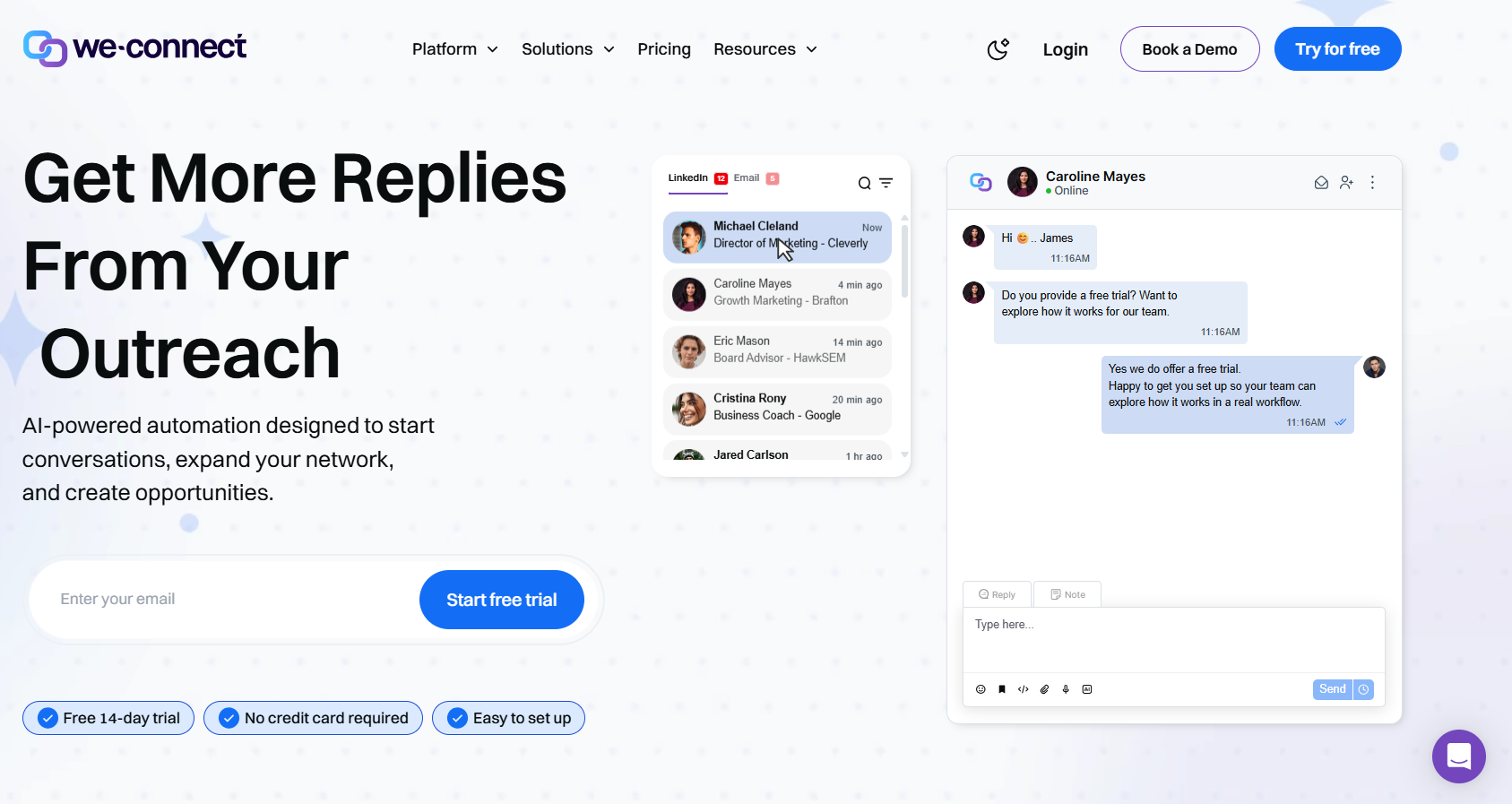
AI works both directions of a We-Connect conversation, writing what goes out and handling what arrives, with your sign-off optional.
LinkedIn automation and email sequences run together underneath it.
Features
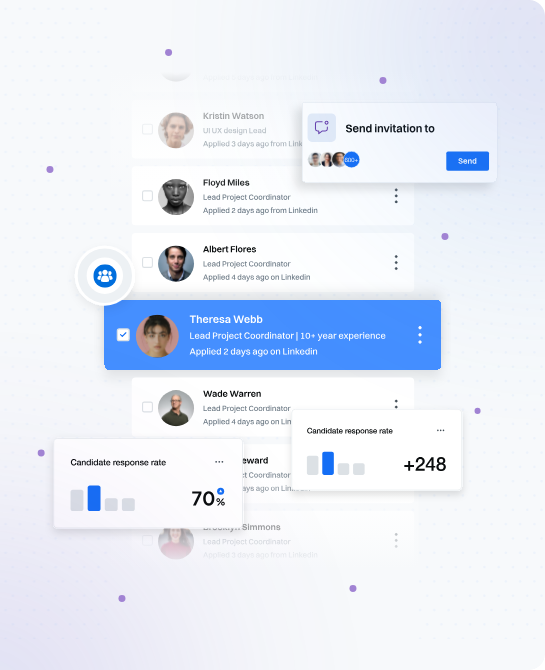
- AI Assist and auto-reply: Profile data feeds the icebreakers, connection notes, and follow-ups, and inbound messages get answered in co-pilot or autonomous mode.
- The LinkedIn action set: Invites through to InMails. The contact's own profile fills in each message before it leaves.
- Behaviour-triggered email: LinkedIn activity is what fires the email step, and the copy gets split tested with opens, clicks, and bounces all reported.
- Lead Engine: A visual builder, still in beta, scoring a contact on their activity and routing them from there.
Pricing
Priced per seat, annual billing lowers the rate, and agencies are quoted directly:
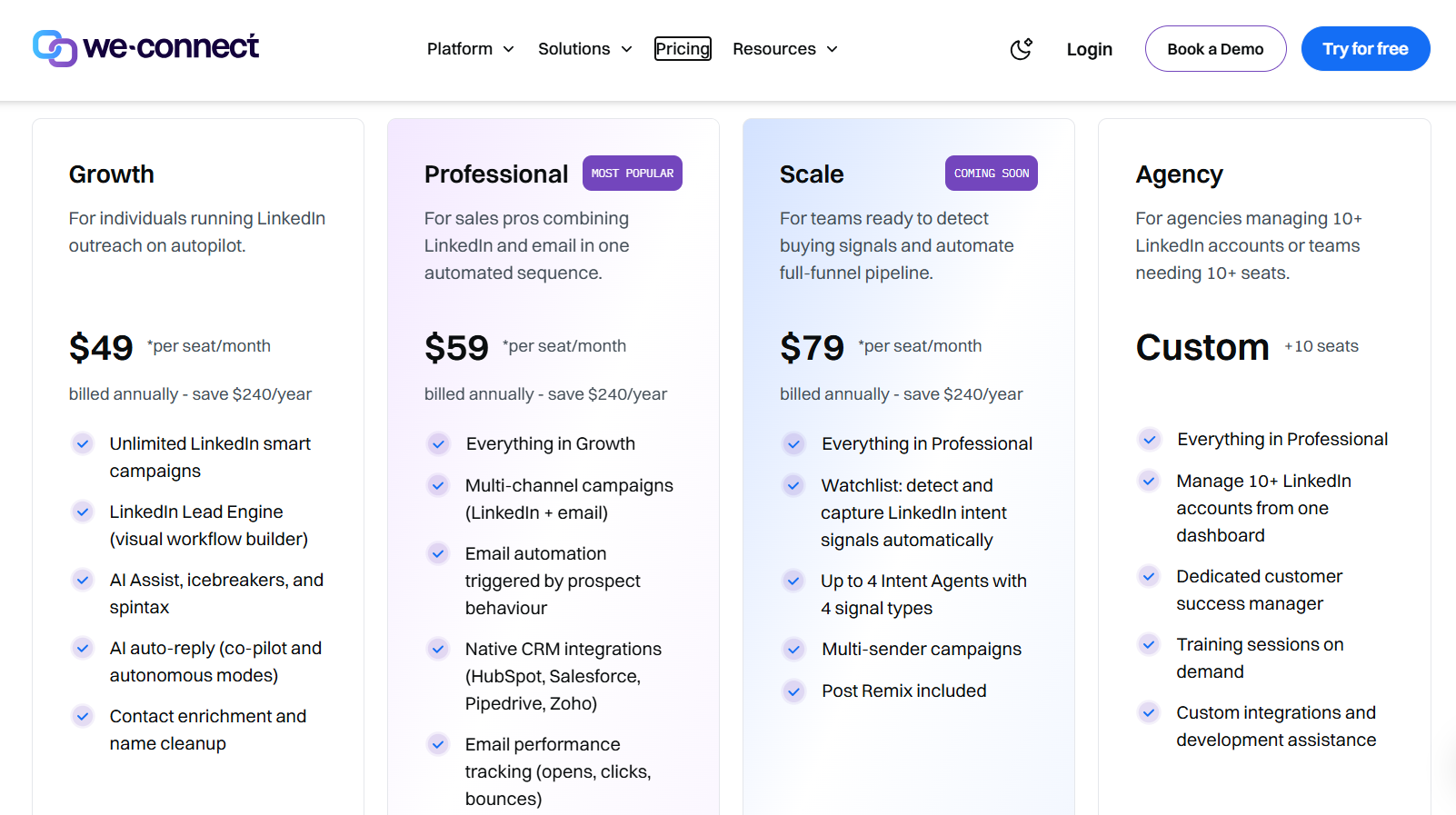
- Growth, $49 per seat per month billed annually: LinkedIn smart campaigns without limit, the Lead Engine, AI Assist with icebreakers and spintax, AI auto-reply, and contact enrichment.
- Professional, $59 per seat per month billed annually: multi-channel campaigns, email automation triggered on behaviour, native CRM integrations, and email performance tracking.
- Scale, $79 per seat per month billed annually: marked coming soon, carrying intent-signal capture, as many as four intent agents, multi-sender campaigns, and Post Remix.
- Agency, custom from ten seats: ten LinkedIn accounts or more on one dashboard, a dedicated customer success manager, training on demand, and help with custom development.
- Free trial: 14 days, no credit card, with Post Remix sold separately from an introductory $16/month/seat.
Pros & Cons
✅ A fully autonomous reply mode, uncommon anywhere near the $50 to $60 mark.
✅ Professional upward carries native syncs to Zoho, Pipedrive, HubSpot, and Salesforce. Campaign alerts reach Slack.
✅ From Professional upward, LinkedIn behaviour is what triggers the email step.
✅ The agency plan runs ten client accounts upward with a named success manager attached.
❌ Entry pricing runs above much of this list.
❌ Post scheduling is an add-on from $16/month/seat.
#8: Clay
Best for: GTM and RevOps teams that want one data layer feeding every play, with AI agents doing the account research the reps would otherwise do by hand.
Similar to: PhantomBuster.
Clay is GTM data infrastructure with AI agents on top.
One contract reaches a marketplace of more than 200 data and AI vendors, and the research, enrichment, and workflow logic behind a team's campaigns all run in the same place.
Features
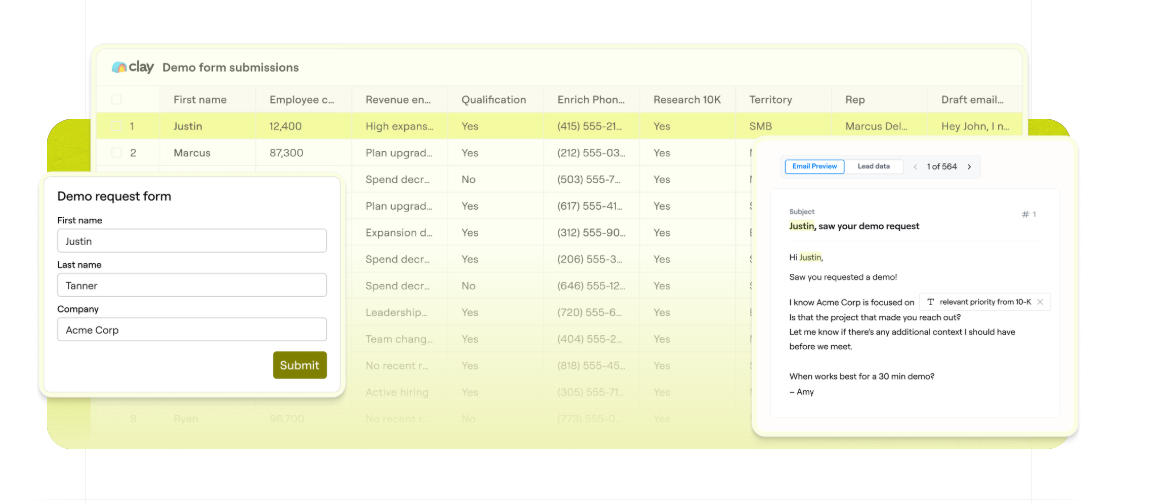
- Data marketplace: A single contract reaches more than 200 data and AI vendors. Waterfall enrichment runs them in order until a record fills, and your own first-party data joins the third-party sources in the same table.
- Claygent: Clay's AI research agent. It has web access, so it generates custom data points no fixed database field holds and qualifies accounts against criteria you describe in words.
- Account Agents: They watch accounts continuously for a reason to engage, then prepare the detail a rep needs before the touchpoint goes out.
- Workflows: Visual and no-code. Code nodes handle complex logic, building happens by natural-language prompt or CLI, and record-level tracing shows exactly what deterministic or agentic reasoning ran at each step.
- Signals: Job changes, promotions, new hires, company news, social activity, and web intent. Growth makes any signal automatable by webhook.
- Execution: The Clay Sequencer sends email natively, ad audiences push to LinkedIn and Meta, and Clay MCP puts prospecting data inside a rep's own AI tools.
Pricing
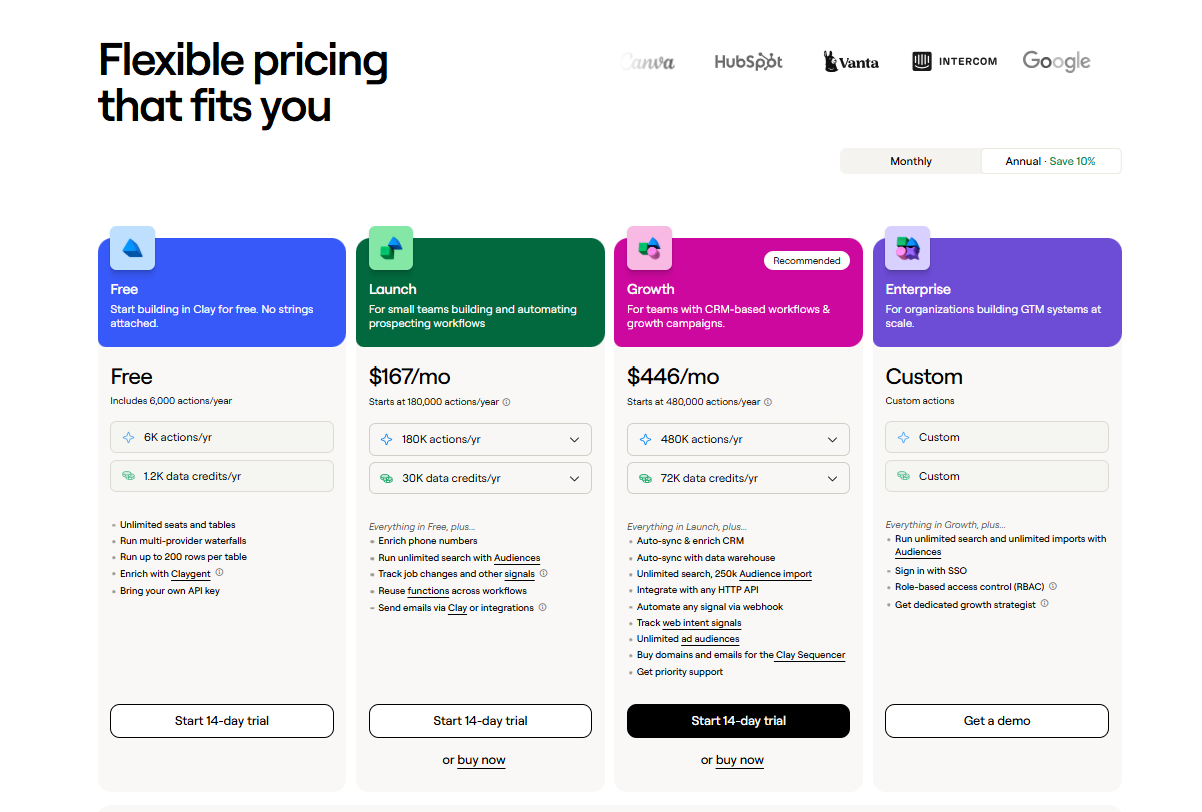
Clay bills on two meters. Actions measure platform usage, and data credits buy data and AI from the marketplace vendors. Annual billing saves 10%:
- Free: 6,000 actions and 1,200 data credits a year, unlimited seats and tables, up to 200 rows per table, multi-provider waterfalls, Claygent, and bring-your-own API key. Phone number enrichment is not included.
- Launch, $167 per month: starts at 180,000 actions a year and 30,000 data credits, which splits as $54 a month of actions and $113 of data credits. Adds phone number enrichment, unlimited search with Audiences, job change and other signals, reusable functions, and email sending through Clay or an integration.
- Growth, $446 per month: starts at 480,000 actions a year and 72,000 data credits, splitting as $185 of actions and $261 of data credits. Adds CRM and data warehouse auto-sync, 250,000 Audience import, any HTTP API, webhook-driven signals, web intent tracking, unlimited ad audiences, domain and mailbox purchase for the Sequencer, and priority support.
- Enterprise, custom: unlimited search and imports with Audiences, single sign-on, role-based access control down to workbook-level credit budgets, and a dedicated growth strategist.
- Free trial: 14 days.
Pros & Cons
✅ One contract covers more than 200 data and AI vendors, so enrichment doesn't arrive as a row of separate invoices every month.
✅ Claygent researches custom data points that no standard database field holds, which is what makes account-level personalization possible at volume.
✅ The free plan carries unlimited seats and tables.
✅ SOC 2 Type II, ISO 27001, and ISO 42001, with GDPR and CCPA support.
❌ Phone number enrichment is off the free plan.
❌ The free plan caps a table at 200 rows.
#9: La Growth Machine
Best for: Outbound teams that want calls and X in the same sequence as LinkedIn and email, and would sooner pay for sending profiles than seats.
Similar to: Reply.io, Lemlist.
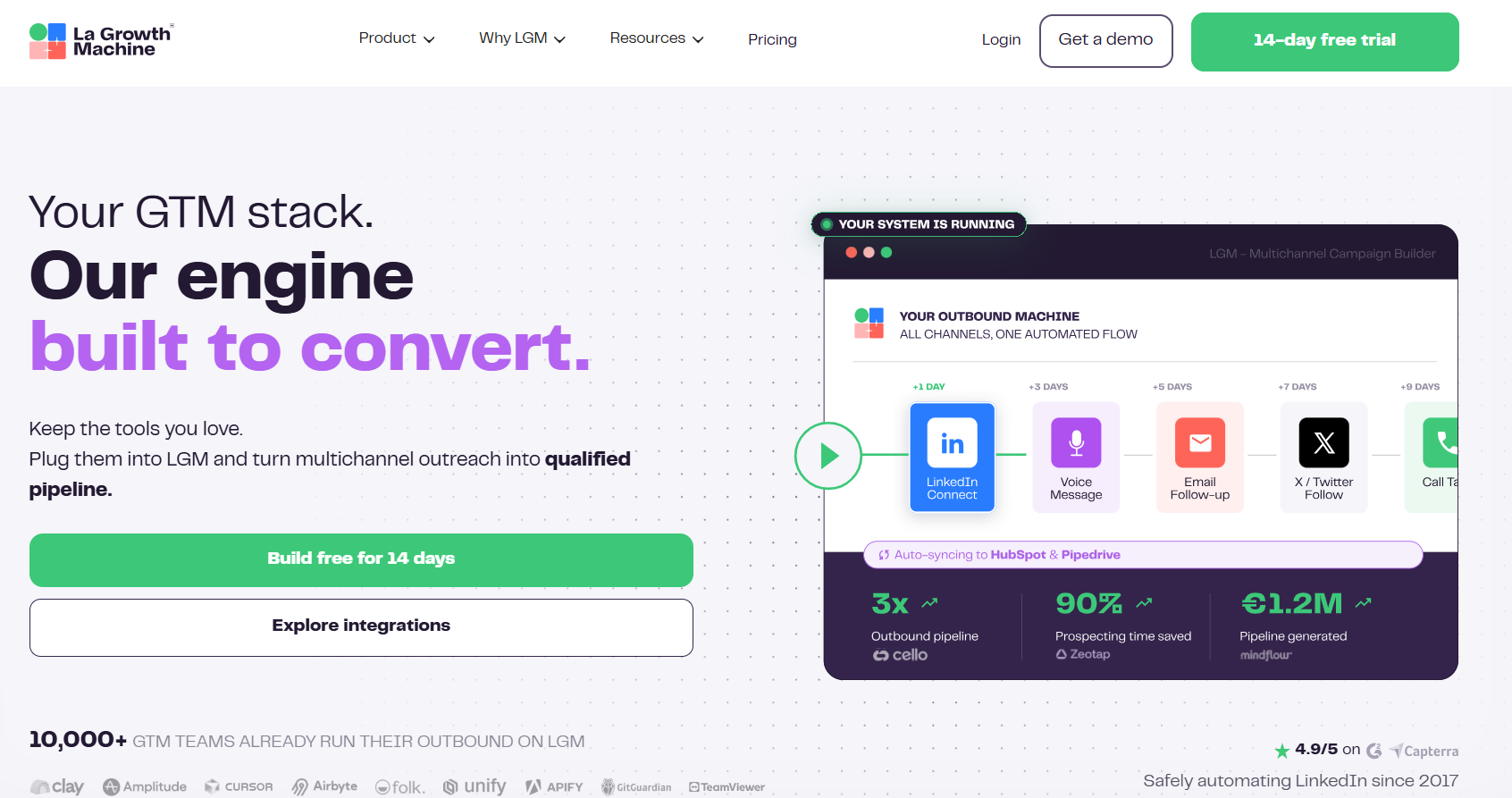
La Growth Machine bills per identity, meaning per profile actively running campaigns. Anyone whose job is answering the replies can be invited at no cost.
Features
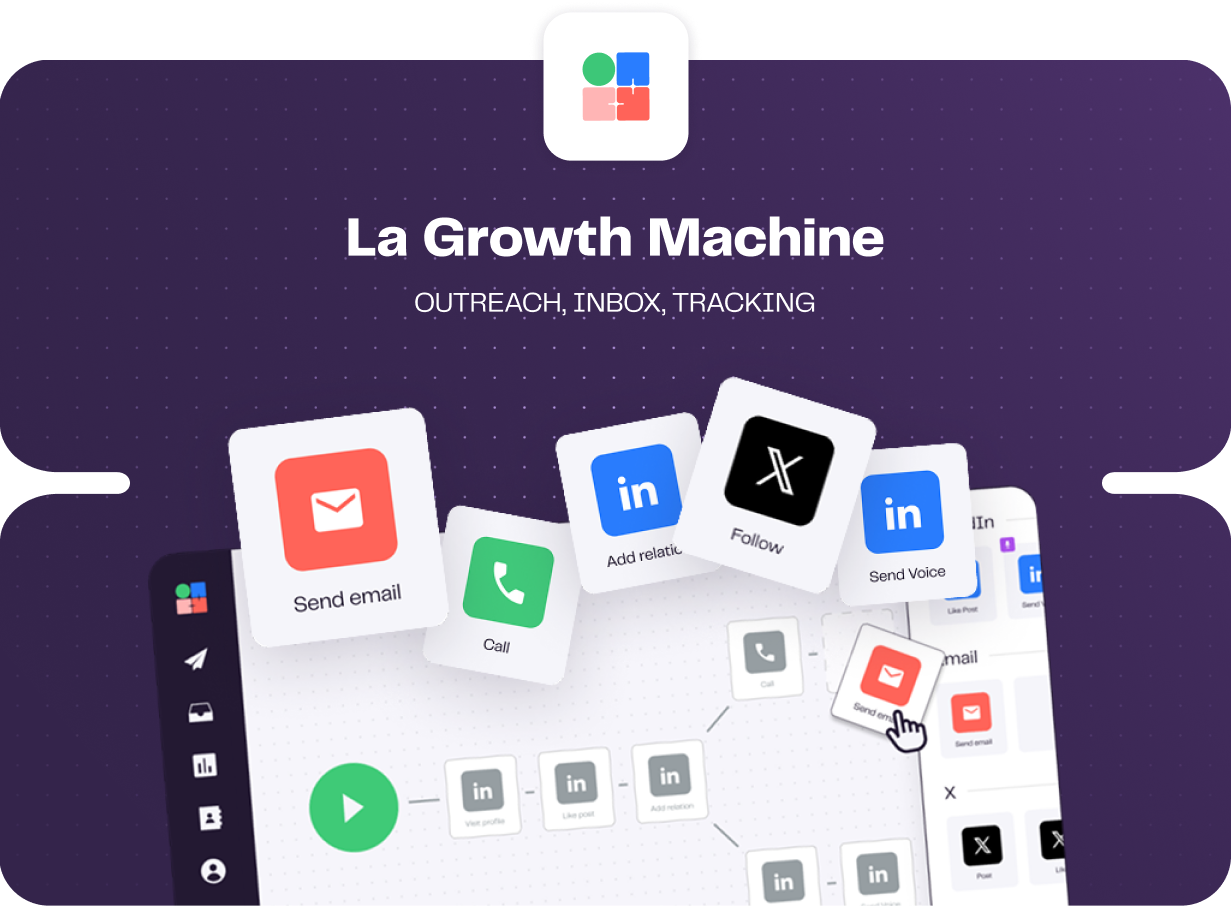
- LinkedIn voice messages: One recording broadcasts at scale, and the AI writes a fresh opening line for every prospect it reaches. Few competitors have an answer to it.
- Conditions and split tests: A lead's behaviour picks the route, with split tests running on subject lines, message copy, and whether an invite carries a note.
- Shared multichannel inbox: Email and LinkedIn replies pool into one view, filtered by identity or campaign. Status labels apply in-thread and carry through to HubSpot or Pipedrive.
- Enrichment inside the subscription: Every plan carries a monthly allowance of verified emails and profile data, drawn from a waterfall of providers.
Pricing
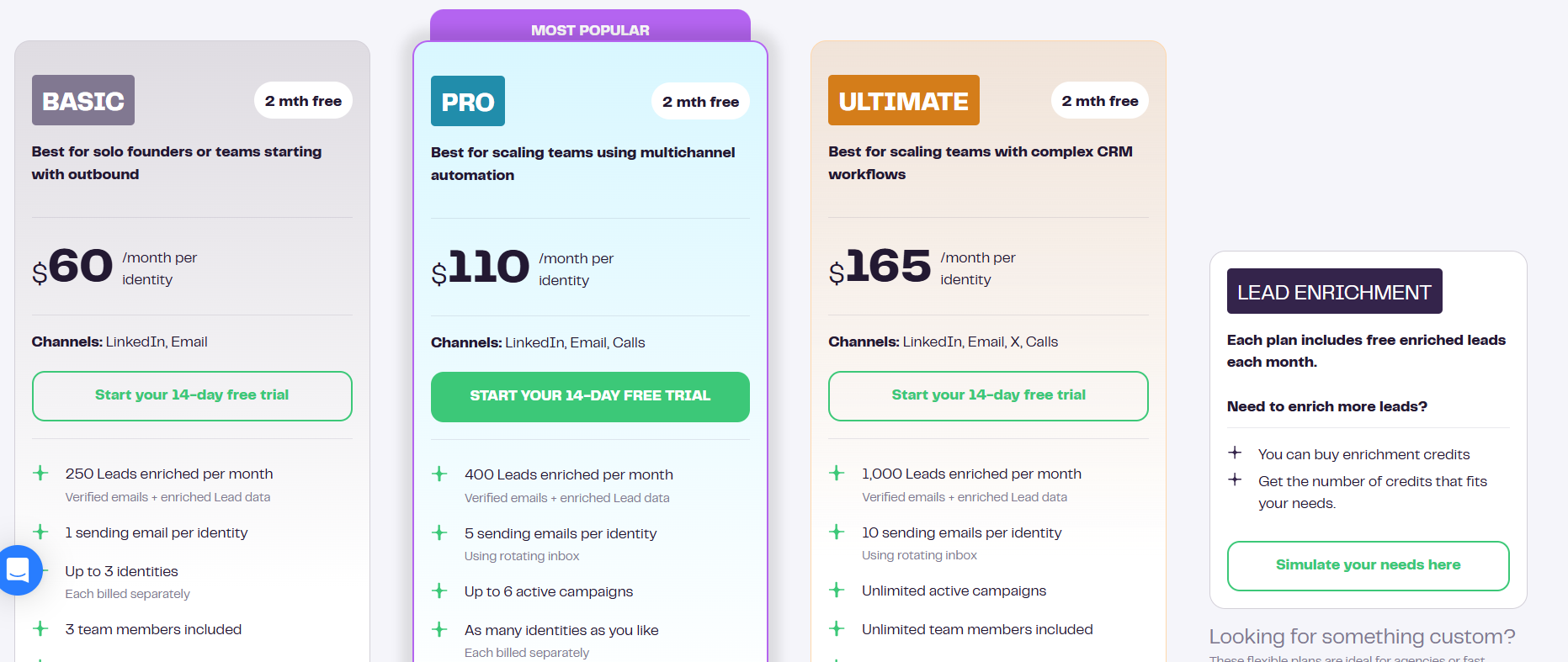
Per identity per month, with two months free on annual billing:
- Basic, $60 per identity: LinkedIn and email, a monthly 250 enriched leads, one sending address, up to three identities, and three team members.
- Pro, $110 per identity: calls arrive, enrichment climbs to 400 leads, five sending addresses rotate, six campaigns run at once, and social warming and 25 free team members come in.
- Ultimate, $165 per identity: X is added, enrichment hits 1,000 leads, ten sending addresses, no cap on campaigns or team members, and two-way HubSpot or Pipedrive sync.
- Agency, custom: quoted from a six-identity minimum.
- Free trial: 14 days, no card required.
Pros & Cons
✅ Four channels inside a single sequence, calling included on Pro and X on Ultimate.
✅ Enrichment is part of the subscription and never becomes a separate invoice line.
✅ Invited team members are free, so the bill only counts profiles that actually send.
❌ Costs climb quickly once several people are sending.
❌ A G2 review reports occasional sync errors and a laggy interface while workflows are being built.
#10: PhantomBuster
Best for: Growth and RevOps people who need lead data and buying signals from more platforms than LinkedIn alone.
Similar to: Waalaxy, Sbl.so.
PhantomBuster is a prospect data toolkit. Extraction and enrichment are the core, outreach automation is layered over that, and the jobs reach more than 15 sources including LinkedIn, Sales Navigator, Google, Instagram, and X.
Features
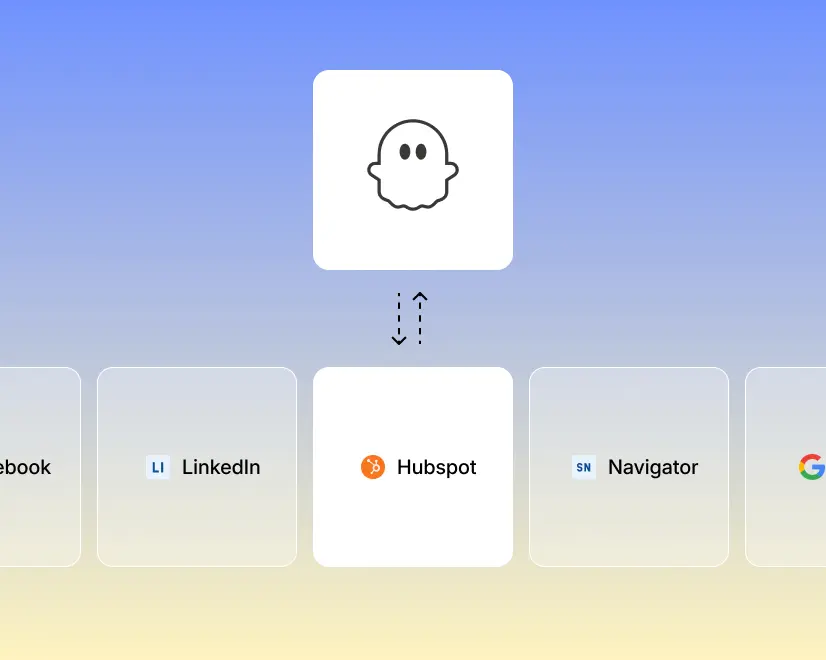
- Prebuilt automations: More than 100 ready-made jobs configure and schedule in minutes, covering everything from the likers and commenters on a LinkedIn post to a Google Maps export.
- LinkedIn outreach: Invites, direct messages, likes, and event invitations run on a schedule, with AI writing each message against whatever signal that lead showed.
- Live enrichment: More than 1,000 data points layer onto a record, and lists refresh on a schedule so a segment never goes stale between builds.
- MCP server: The toolkit exposes to Claude or ChatGPT.
Pricing
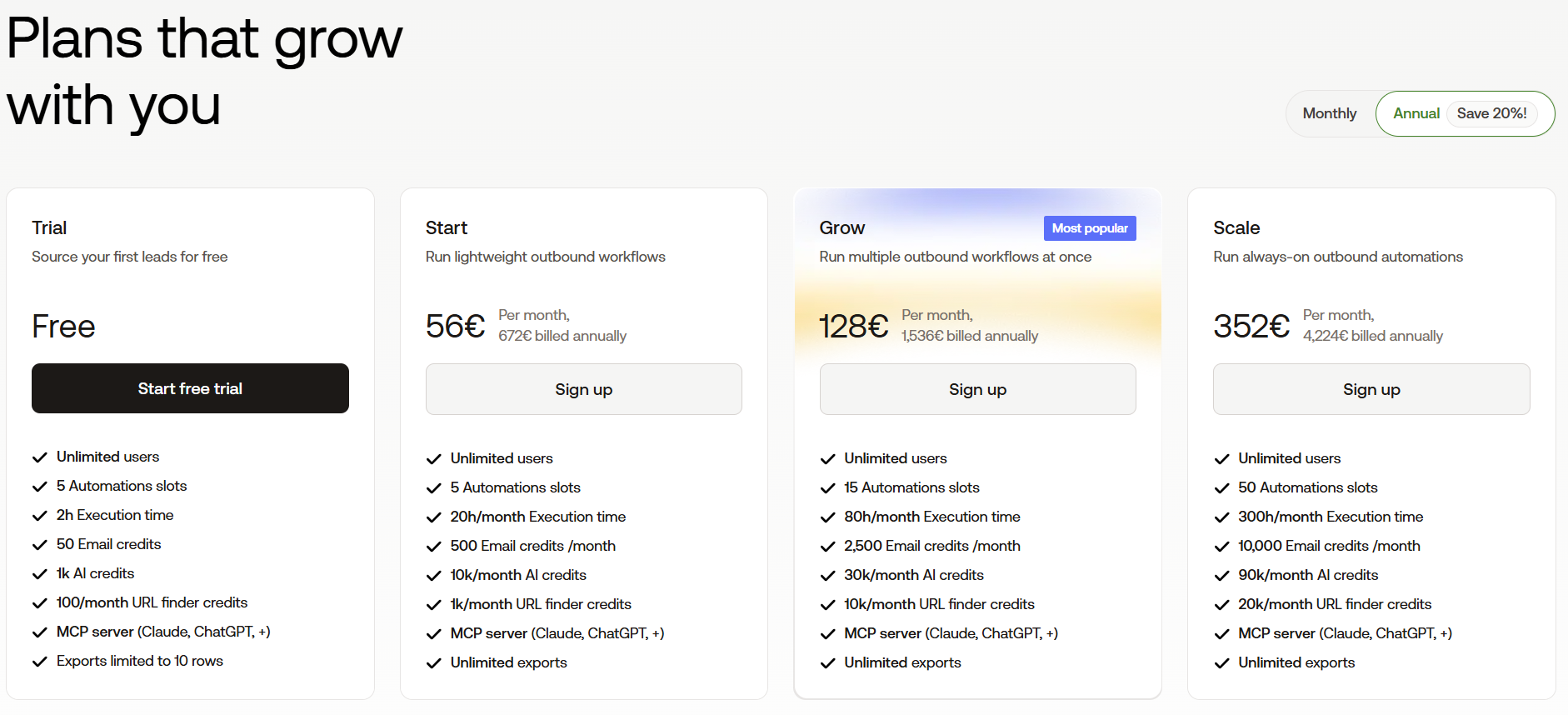
PhantomBuster meters automation slots, execution hours, and credit pools separately from each other. A year up front cuts 20%:
- Free trial: five automation slots, two execution hours, 50 email credits, and exports capped at ten rows.
- Start, €56 per month billed annually: five slots, 20 execution hours, 500 email credits, and 1,000 URL finder credits.
- Grow, €128 per month billed annually: 15 slots, 80 hours, 2,500 email credits, and 10,000 URL finder credits.
- Scale, €352 per month billed annually: 50 slots, 300 hours, 10,000 email credits, and 20,000 URL finder credits.
Pros & Cons
✅ Signals and records from more than 15 platforms, covering ground no pure sequencer ever touches.
✅ Technical extraction jobs run from a prebuilt automation with no code written.
✅ MCP access, for teams already prospecting through an AI assistant.
❌ Slots, hours, and credits all meter separately, which can make the monthly figure hard to predict.
❌ No unified reply inbox, so conversations happen elsewhere.
Which AI sales tool should you choose?
You want to work backwards from the job you want off your plate, because that's the only question these ten answer differently:
- You want the whole motion handed over? Sbl.so runs LinkedIn and WhatsApp on profiles it supplies and takes a founder from signal to booked meeting with nobody supervising. 11x does the same across more channels and adds live phone calls, on a quote that starts with a demo.
- Your data is thin? Clay puts more than 200 vendors behind one contract and sends Claygent after whatever your database doesn't hold. PhantomBuster reaches more than 15 platforms and exposes the toolkit to an AI assistant over MCP.
- Replies keep landing in spam? Warm-up, inbox rotation, limit management, and domain monitoring all ship inside Lemlist and Salesforge, so nobody buys a second deliverability tool.
- One channel isn't enough? Five channels branch inside a single Reply.io sequence. La Growth Machine adds in-app calling on Pro and X on Ultimate, billing by sending profile so whoever answers replies costs nothing.
- Nobody has time to answer? We-Connect handles that in co-pilot or autonomous mode from $49 a seat.
Now check the second invoice, the one that shows up after the subscription line.
Most AI sales tools are a clever layer over a stack you still have to assemble: proxies, a separate email sender, a lead source, enrichment credits, an inbox charged on the side.
Teams build that way on purpose all the time, and every tool above is worth its line when the job it covers is the job you actually have.
What Meet Alfred does is put the AI inside a platform that already covers the rest.
Four repetitive jobs go to the model: finding the profiles, writing each prospect's own details into the copy, pacing the sending so the account stays out of trouble, and stopping the campaign the second somebody answers.
Around that you get a dedicated IP on your account, email volume governed only by your mailbox, prospect discovery in the same product, and the Smart Inbox from the $29 tier up.
Client branding, a custom domain, and branded system notifications all arrive at five seats on Team, at $39 per user, without a ten-seat negotiation first.
➡️ If you want the AI doing the prospecting and the personalization but not the talking, start a seven-day trial. Every feature is unlocked, and no card is needed to get started.
A demo is the other route in, and someone from our team will run through the platform with you.
⚠️ Disclaimer: This article was last updated on the 30th of September, 2026, and if there's any misinterpretation of the information, please contact us, and we will fact-check it.
Frequently asked questions about AI sale stools
What is an AI sales tool?
An AI sales tool is software that uses a model to take over part of a sales rep's work: finding prospects, researching them, writing the outreach, running the follow-up, or answering what comes back.
Two shapes exist, and they price very differently:
- One shape is the agent, which takes the whole job: You describe the buyer and the offer, and it builds the list, sends, replies, and books. Sbl.so, 11x, Agent Frank, and Jason all work this way.
- The other keeps your team in the driver's seat and puts the model on the repetitive judgment underneath: Meet Alfred, Lemlist, We-Connect, and La Growth Machine work this way, and pricing starts in the tens per user.
What is the best AI sales tool in 2026?
Meet Alfred is the best AI sales tool in 2026 for sales teams and agencies, because the AI covers four jobs inside one subscription that already carries LinkedIn, email, and X outreach: prospect discovery through Lead Finder, per-prospect message personalization, randomized sending pacing, and reply detection that pauses a campaign the moment somebody answers.
If what you actually want is an agent that takes the whole motion and hands back meetings, Sbl.so and 11x are built for that and Meet Alfred isn't.
What's the difference between an AI SDR and an AI sales platform?
The difference is who produces the work. With an AI SDR your rep reviews output the model created.
With an AI sales platform your rep creates the campaign and the model handles the repetitive judgment inside it.
The price gap follows from that.
Published AI SDR pricing on this list starts at $499 a month for Agent Frank and $500 for Jason, both billed on top of a platform you're already paying for.
Which one fits depends on whether you have people to run outreach:
- If you do, the platform shape costs less and keeps the judgment with them.
- If you don't, the agent is doing a job nobody else is going to do.
Can AI sales tools replace an SDR?
Not fully, and the product design itself shows where the line falls.
The agents can run the volume work: list building, first touches, follow-ups, and a good share of the reply handling.
Sbl.so passes a thread to a person once the lead warms up, and Salesforge runs Agent Frank in co-pilot mode for teams that want a rep approving the output.
What an AI tool won't do is own the relationship, read a room on a call, or decide which market to go after next.
Are AI sales tools safe to use on LinkedIn?
LinkedIn actively detects automation regardless of which tool is sending, so safety comes from how a platform behaves and not from a vendor's promise.
The things that matter are conservative daily limits, randomized pacing that doesn't look mechanical, sending from the cloud and not from a browser extension on your own machine, and messaging personal enough that recipients don't report it.
Meet Alfred handles this with daily limits you set with headroom to 100 connection requests a day inside safe parameters, randomized pacing on every action type, working hours with time zone control, and a dedicated IP address per connected account on AWS infrastructure.
Do AI sales tools work for small teams?
Yes, and the entry prices on this list are built for exactly that.
A two-person team can run Meet Alfred Basic at $29 a user, We-Connect Growth at $49 a seat, or Clay's free plan with unlimited seats, and get real work out of all three.
What catches small teams is the add-ons, not the subscription: enrichment credits, proxies, a separate email sender, or an inbox charged on the side.
This is why I’d recommend you price the whole stack before you compare the advertised tiers.
Related Articles